
A silicone sealant technical data sheet should help you make a purchasing decision: which products belong on the shortlist, which reported values can be compared, and what you still need to ask before requesting a sample or quote. Read it in this order: identity, revision, cure chemistry, material compatibility, test basis and then performance.
That process supports product selection. It does not approve a sealant for the actual project or material combination.
Direct comparison starts with the test basis: the same property, a comparable method and comparable test conditions.
Two sealants can show similar figures on their TDS and still be poor candidates for direct comparison. A large number from a different test, specimen or curing condition may answer a different question, and a product that is wrong for the materials it touches is not rescued by a stronger headline value.
Lock the Product and Revision Before Reading the Table
Start at the document-control block, not the technical-property table. Record:
- manufacturer and exact product or model;
- document number, issue date and revision;
- language and destination market;
- package, color or component when it changes the documented scope;
- the source from which the file was obtained.
If the model on the sample, label and TDS does not match, stop. If two revisions disagree, ask which one is current and what changed. A newer date is not enough when the document belongs to a different market or product variant.
Check the Cure Chemistry and Material Compatibility
Before comparing performance, identify the cure chemistry. A TDS may describe an acetoxy-cure silicone, a neutral-cure silicone or another system. Two clear sealants can look almost identical as they are applied while behaving very differently around glass, metal, coatings or an interlayer in layered glass.
We have seen this become an expensive mistake in an actual glazing project. A customer used a clear acetoxy silicone on film-coated glass. During application and the early stage of curing, the joint looked normal, so there was no obvious warning that the sealant had been selected incorrectly. The problem appeared later: the film layer was damaged in the sealed area, resulting in extensive rework.
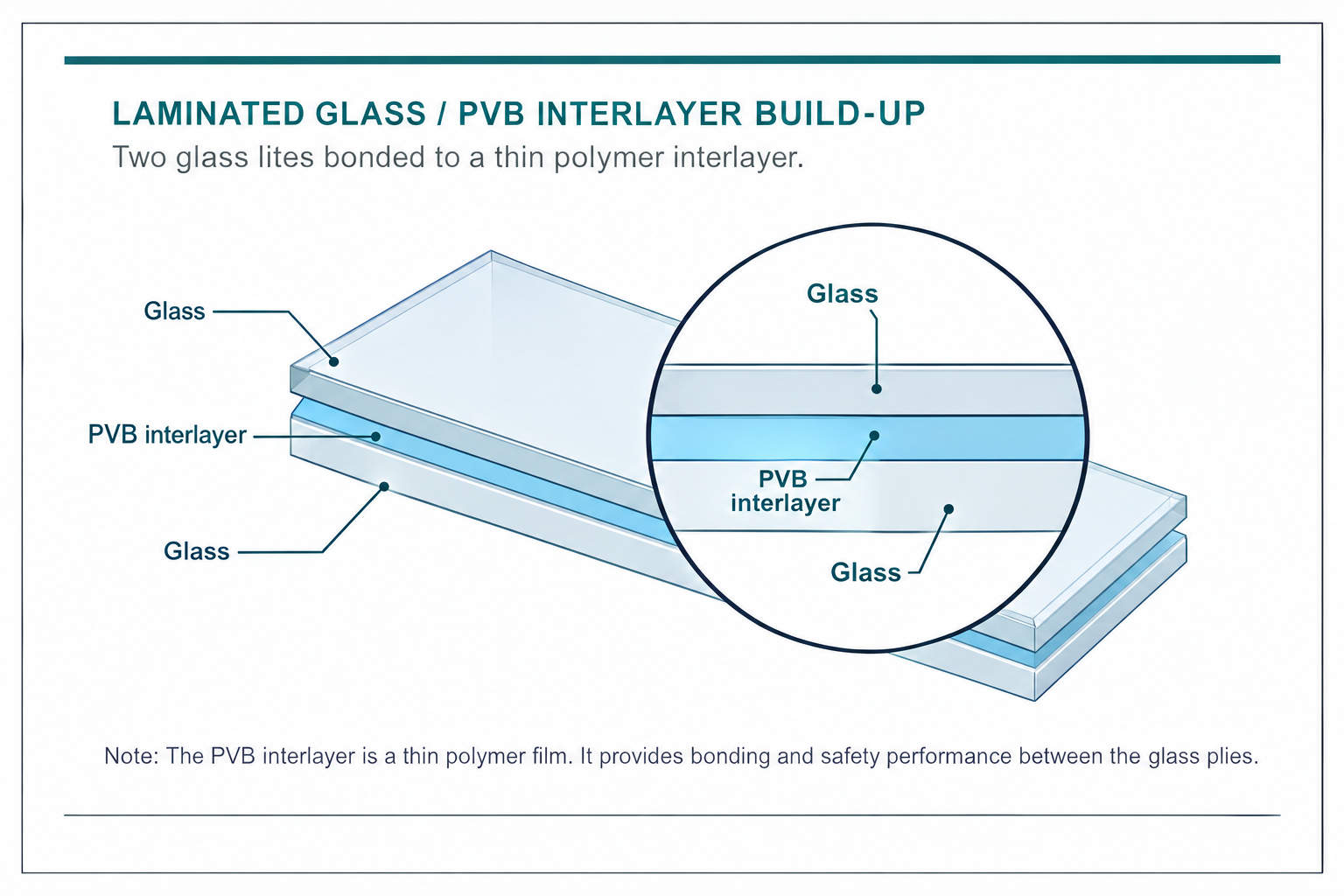
That case changed our reading order: check cure chemistry and the exact glass, film, coating or interlayer before comparing tensile strength, elongation or other performance numbers. A cure-system label alone is not compatibility approval.
Read Every Number With Its Test Basis
Once the product and materials pass that first screen, capture five items together for each technical row:
- Property: what is actually being measured or declared?
- Value type: is it typical, tested, declared or a specification value?
- Method: which standard, procedure and version produced the result?
- Unit: are the units identical or converted on a sound basis?
- Condition or sample: which substrate, specimen, cure, temperature, humidity, geometry or test cycle applies?
The number is the final field in this chain. If a sheet reports a cure rate at 23°C and 50% relative humidity, compare it with another cure-rate result under the same or explicitly reconciled conditions. If one sheet gives tensile strength under one method and another uses a different specimen or test speed, a unit conversion alone does not make the values equivalent.

Know What the TDS Can Decide
A TDS normally brings product identification, intended uses, reported properties, application guidance and limitations into one product document. It can help you decide whether a sealant belongs on the shortlist. Project compatibility, approval for a particular joint and acceptance under a project specification require additional evidence beyond the TDS.
Keep the document roles separate:
| Document or record | Main question it answers | Buyer action |
|---|---|---|
| Technical data sheet | What is this product positioned for, and what properties or instructions are reported? | Use it to screen the exact product and identify missing checks |
| Safety data sheet | What hazard, handling, exposure-control and emergency information applies? | Use the applicable market SDS for hazard communication |
| Project specification | What performance, design, submittal and acceptance requirements control this job? | Match the product evidence to every applicable requirement |
| Test report, sample or project review | Does the identified product or specimen cover the required method, substrate and scope? | Confirm the evidence chain before approval |
OSHA’s Hazard Communication FAQ defines the SDS as a structured hazard-communication document. Caltrans’ silicone joint sealant authorization criteria show why the roles stay separate: the agency asks for a material/system data sheet, an SDS, a sample when requested, and results against named acceptance criteria. The exact approval process varies by project, but each record still has its own job.
Separate the Value Roles
The label beside a number tells you how to use it. Keep the value role in a separate column when comparing products.
| Value role | How to read it | What not to assume |
|---|---|---|
| Typical value | Representative product information under the stated conditions or document basis | A guaranteed limit for every batch |
| Tested result | An observed result for an identified specimen under a named method and conditions | The same result on every project substrate or geometry |
| Declared classification | The manufacturer’s stated class tied to a named standard and scope | Universal suitability or a higher general quality grade |
| Product specification | A stated manufacturer limit, range or instruction where the document labels it that way | A project acceptance criterion unless the project adopts it |
WR550 provides a useful example. In Rev.01, the 25-minute skin-formation time is reported as a typical value at 23°C and 50% relative humidity, while the one-hour tack-free time is reported as a tested result. The same table also includes a ±35% movement classification for correctly designed joints and a specified application-temperature range. These figures sit next to each other on the TDS, but they do different jobs. When comparing another sealant, check how each value is defined and reported before placing the numbers side by side. The test method, specimen, classification system or reporting convention may be different.
Do Not Confuse Similar-Looking Properties
Several TDS fields look related but answer different decisions.
| Pair that is often confused | Why they differ | Correct next check |
|---|---|---|
| Tack-free time vs full cure or return to service | Tack-free describes the exposed surface; cure continues inward and service readiness depends on geometry, conditions and exposure | Read cure rate, bead depth and the exact protection or service instruction |
| Elongation at break vs movement capability | Elongation is measured on a tensile specimen; movement capability is a joint classification or declared cyclic-movement scope | Find the named movement class and its joint-design conditions |
| Application temperature vs service temperature | One controls installation; the other describes the cured product’s reported service range | Record both in separate columns |
| Adhesion result vs project compatibility | A result may cover standard substrates and conditioning, not the actual coating, cleaner or adjacent material | Check the tested substrate and any required project trial |
| Sag result vs movement performance | Sag describes uncured placement behavior; it does not describe cyclic joint movement | Use the sag result for application handling and the movement field for joint review |
This is why a comparison spreadsheet needs more than Property A / Product 1 / Product 2. Add columns for value role, method, unit, conditions and the action needed when the basis does not match.
Read Standards in Their Actual Scope
A standard number is useful only when you understand what it classifies and which designation the product claims.
The official ASTM C920-18(2024) page separates Type, Grade, Class and Use. ASTM also cautions that not every sealant meeting the specification is suitable for every application or substrate, and that its standard specimens do not automatically represent other project materials.
ISO 11600:2002, confirmed current in 2025, likewise classifies building sealants by applications and performance characteristics and associates requirements and test methods with the classes. ASTM C920 and ISO 11600 are related systems, not interchangeable labels.
When a TDS cites another national or industry standard, keep the exact code, version, classification and method. Keep that standard separate from ASTM or ISO unless a current product document or test record supplies the equivalence.
Check Intended Use, Limitations and Revision Notes
The shortlist is complete only after you read the intended-use, substrate, preparation, limitation, storage and document-control sections together.
Ask five final questions:
- Does the named application match the joint’s real role – interior finish, sanitary perimeter, weather seal or another function?
- Are both substrates and their coatings or finishes covered, or is an adhesion/compatibility trial required?
- Does the exposure include water, UV, movement, cleaning, temperature or another condition the document addresses?
- Is a separate SDS, test report, certificate, sample or project approval required?
- Is this still the current revision for the destination market?
A missing field is a request, not permission to fill the gap with a competitor value or a nearby product’s result.
Build a Comparison That Produces a Decision
Use one row per decision-critical property. For each row, choose one of three outcomes:
- Comparable: identity, definition, value role, method, unit and condition align.
- Comparable with a stated adjustment: a transparent unit conversion or documented condition difference is acceptable for the decision.
- Not directly comparable: a method, specimen, condition, value role or scope is missing or different; request clarification before scoring the row.
Treat the rows as decision inputs, not a universal product score. A paint-ready interior gap and an exterior moving joint do not assign the same importance to the same properties. The application decides which rows matter.
For exterior window and door perimeter work, start with the Windows & Doors application guide to define the joint role, then use the current product TDS to review the model. For current Vesta documents, use Vesta Technical Resources rather than an old attachment or an unverified third-party copy.
What to Send for a Document Check
Send the exact manufacturer and model, TDS document number and revision, destination market, cure chemistry or film, coating or interlayer compatibility question, application and joint role, exact glass construction, both substrates and finishes, exposure, and the property, standard or approval you need to verify. Include the sample or document question you want resolved.
We can identify the current Vesta document and the relevant product or application page, then flag which comparison inputs are still missing. Project compatibility, engineering acceptance and special approvals remain separate decisions for the actual materials and requirements.