
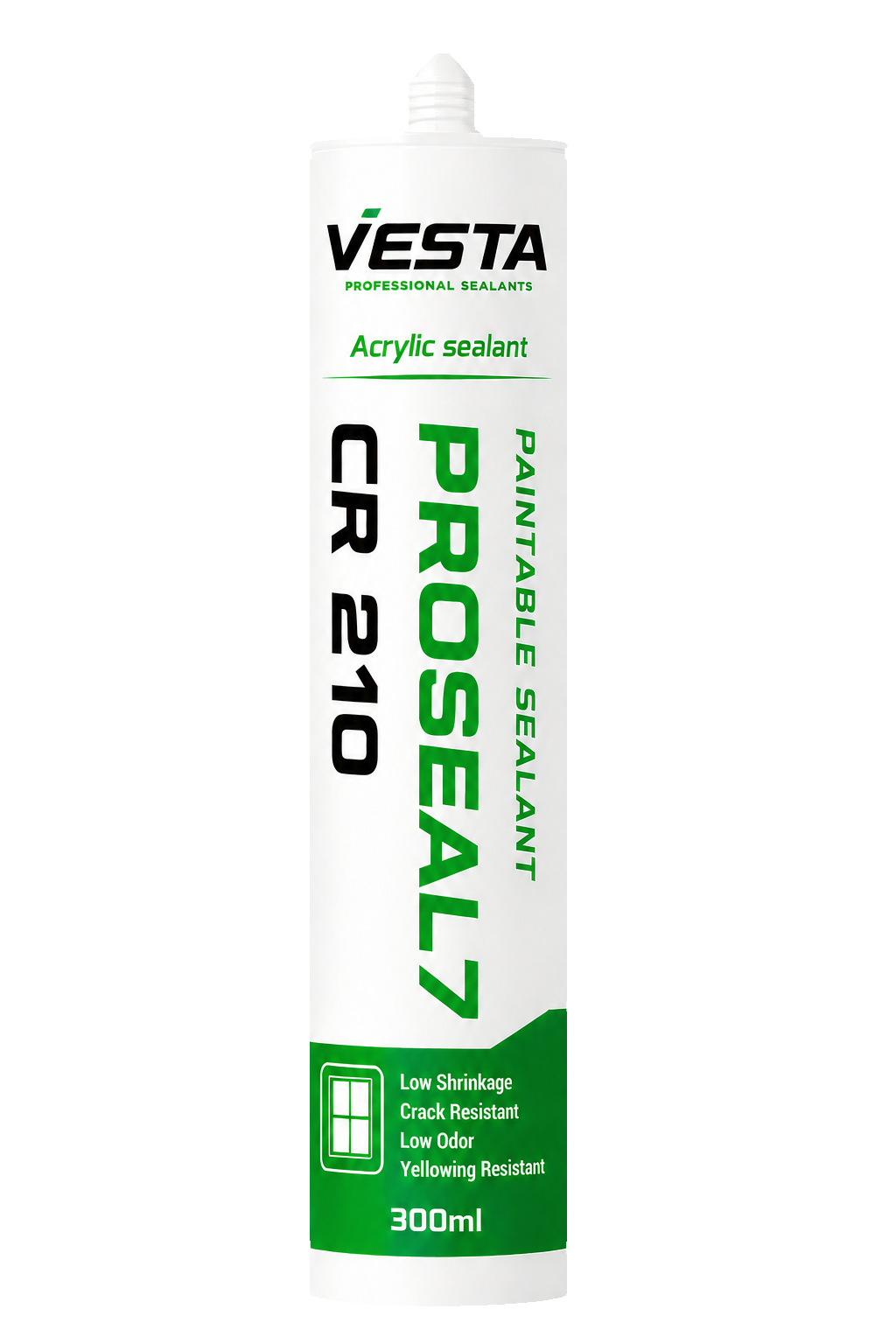
CR210 Paintable Acrylic Sealant
Paintable Acrylic Latex Caulk for Dry Interior Gaps
Fill the gap. Finish with paint.
One-component, water-based and low-odor acrylic latex sealant for paint-ready interior filling around joints, cracks, frames, trim and plasterboard work. Uncured residue can be cleaned with water.
Technology: Water-based acrylic latex · Sizes: 300 mL / 600 mL · Colors: White, Grey, Black
TechnologyOne-component water-based acrylic latex
Primary useInterior filling and paint-ready finishing
FinishPaintable after sufficient drying
CleanupWater while the material is uncured
Product overview
Paintable acrylic sealing for dry interior finish gaps.
CR210 is a one-component, water-based acrylic sealant for clean, paint-ready interior filling and finishing. It dries as water evaporates and is not a substitute for a weather-resistant, structural or high-movement sealant.
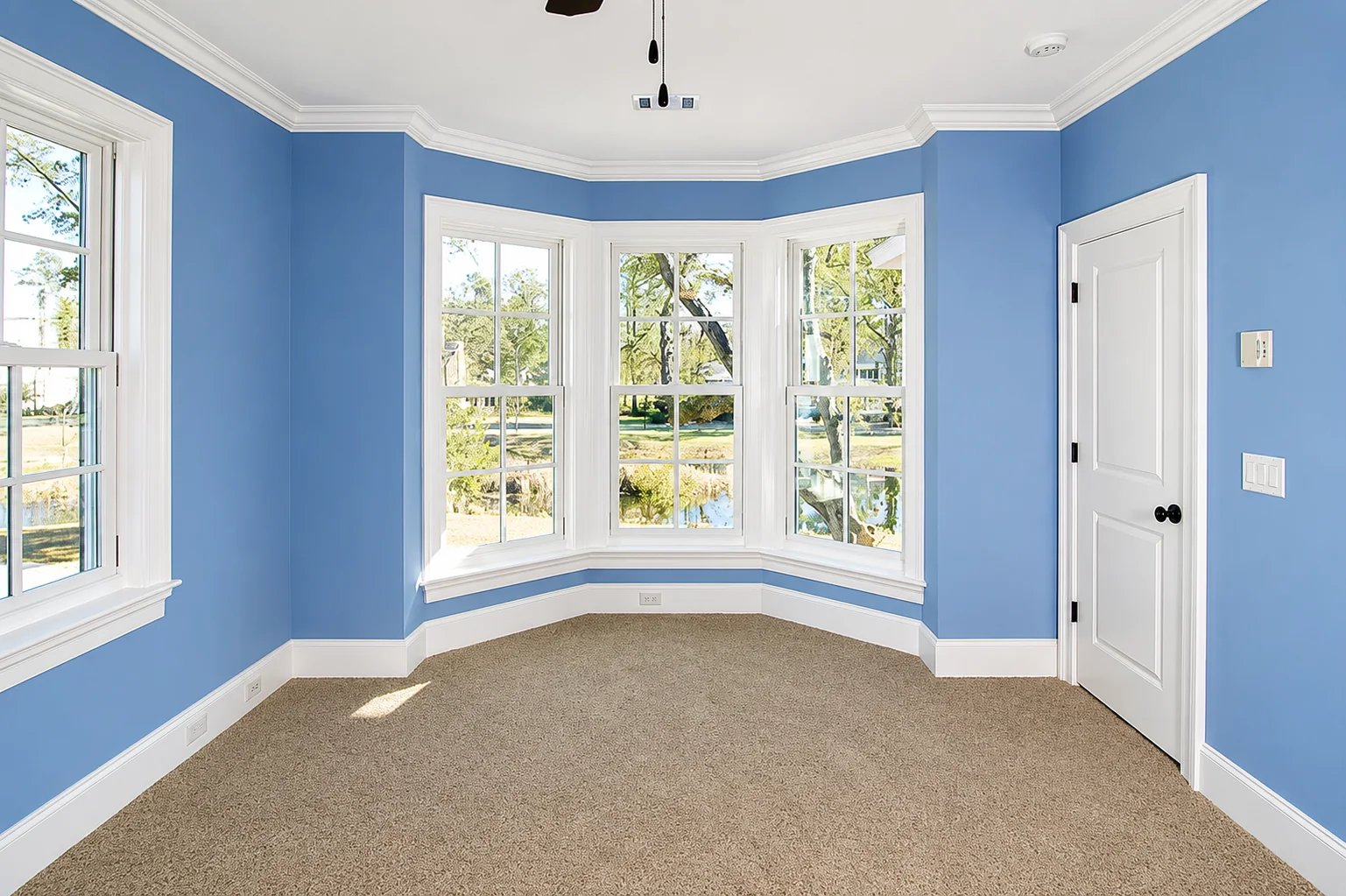
- Interior wall-to-ceiling gaps and small cracks
- Dry interior window and door frame perimeters
- Skirting boards, trim and decorative molding
- Plasterboard joints, fastener holes and finish details
Where CR210 Fits
Substrate planning
Match CR210 to the actual interior surface.
Concrete, mortar, plaster and plasterboard are the starting path for paint-ready interior filling. Coatings, non-porous materials and sensitive finishes need checks on the actual project surface.
| Substrate group | Selection status | What to confirm |
|---|---|---|
| Concrete, mortar and plaster | Typical starting surface | Remove dust and loose material; confirm the surface is clean, sound and sufficiently dry. |
| Plasterboard | Typical starting surface | Remove friable material and check the intended paint finish on a representative area. |
| Wood | Project test | Check adhesion and the final painted appearance on the actual trim or frame material. |
| Painted or coated surfaces | Compatibility test | Verify coating adhesion, sealant compatibility and overpaint appearance before full application. |
| Common glass and aluminium | Project test | The current record covers common glass and aluminium; confirm the actual finish and project materials. |
| PVC and other non-porous surfaces | Compatibility test | Complete adhesion and compatibility checks on representative project specimens. |
| Bituminous substrates and natural stone | Specialist check | Check compatibility before use; natural stone also requires a staining check. |
| PE, PP and PTFE | Not recommended | Select a product specifically approved for the substrate. |
Plan for a dependable finish: confirm the actual substrate, coating, cleaner, paint system and project conditions. Review the complete CR210 substrate guidance in the TDS.
Technical data
Performance data for confident product selection.
CR210 combines smooth extrusion with controlled, non-sag placement for clean interior filling and finishing. The values below come from the supplied CR210 test record, which identifies JC/T 484-2006 as the test basis.
| Property | Recorded result |
|---|---|
| Appearance | Uniform, fine paste with no bubbles, crusts or gels |
| Density | 1.55 g/cm³ |
| Consistency | 9.3 cm |
| Sag resistance | 0 mm vertical sag; no horizontal deformation |
| Tack-free time | 1 h |
| Extrusion rate | 300 mL/min |
| Adhesive damage — common glass and aluminium | 0% |
| Volume change | 25% |
| Shore A hardness | 40 |
| Elongation at break | 120% |
| Adhesion after tension–compression cycles | No damage |
These recorded results provide a practical basis for comparing CR210 during product selection. The 1 h tack-free result describes the surface state; allow the full bead to dry sufficiently before painting. Elongation at break is a material property and is not used as a joint movement rating.
Quantity & shipping planner
Plan the CR210 order your way.
Start with complete cartons for a wholesale order, or use joint dimensions to estimate the required package quantity.
Calculation basis
Wholesale totals use 24 cartridges or 20 foil sausages per carton, the confirmed 12 kg or 18 kg carton weight, and the corresponding outer-carton dimensions. CBM is the sum of outer-carton volumes. Project quantity rounds the calculated package requirement up to complete cartons. The 25% planning allowance is an adjustable estimating input; the recorded 25% volume-change result describes product drying behavior, not jobsite waste.
A practical five-step application summary.
- Confirm the joint.Check the dry interior application, substrates, adjacent finishes and paint requirement before work starts.
- Prepare sound surfaces.Remove dust, oil, grease, loose particles and other material that may impair adhesion. Use suitable non-adhering backing where depth control is required.
- Apply and tool continuously.Fill from the joint base, maintain contact with both joint sides and tool before the surface skin forms.
- Clean uncured residue.Remove fresh material with water and protect the bead from contamination, frost and premature service.
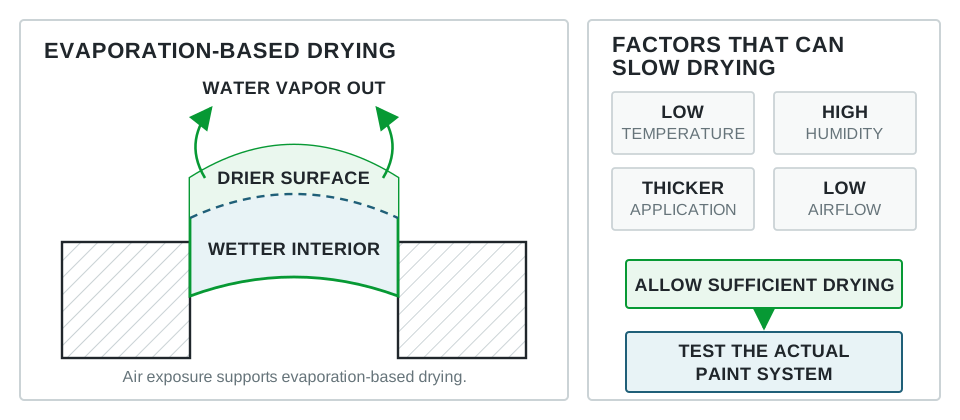
- Allow sufficient drying.The recorded 1 h tack-free result is not full drying. Test the actual water-based paint before full application.
Common application mistakes
Avoid the errors that make an interior acrylic bead fail before the finish is complete.
Most avoidable problems start before the bead is tooled: contaminated bond faces, unverified compatibility, uncontrolled depth or a mistaken assumption about drying stage.
Dust, oil, grease and loose particles can prevent proper contact. Clean the actual bond surfaces and confirm that they are sound and sufficiently dry.
“Wood,” “glass,” “aluminium” or “PVC” does not identify the finish, coating, porosity or contamination. Test the actual project materials where current evidence does not cover them.
Bonding to the joint base can restrict the intended joint behavior. Use suitable non-adhering backing where depth control is needed so the sealant bonds to the two opposing sides.
CR210 has no numerical movement or joint-size recommendation. Confirm the actual gap, substrate condition and expected movement before specifying the bead geometry.
The recorded 1 h tack-free result is a surface result, not full drying or a fixed paint-over time. The interior may still need more drying.
Tool and remove masking before skin formation, then protect the fresh bead from rain and frost while it dries. Low temperature, high humidity and thicker applications extend drying.
For distributors and brands
Evaluate CR210 for a paintable interior acrylic range.
Share the intended interior applications, substrates, color, 300 mL or 600 mL requirement, quantity and destination market. Vesta will review product fit, available formats and the documents needed before quotation.
Product FAQ
Common CR210 selection questions
What is CR210 designed for?
CR210 is a one-component, water-based acrylic sealant for filling and finishing static and low-movement interior joints, cracks and gaps around frames, trim, plasterboard and other compatible interior construction surfaces.
Can CR210 be painted?
Yes, after sufficient drying. Test the actual water-based paint system on the project surface before full application; no fixed paint-over time is declared.
How does CR210 dry?
CR210 dries as water evaporates from the exposed surface. Temperature, humidity, airflow, substrate absorbency, joint dimensions and application thickness affect the drying sequence.
Which substrates can be considered?
Concrete, mortar, plaster and plasterboard are the starting screening path when clean, sound and sufficiently dry. Wood, coated surfaces, aluminium, common glass, PVC, bituminous substrates and natural stone require project-specific checks. PE, PP and PTFE are not recommended.
Can CR210 be used outdoors or in continuously wet joints?
CR210 is positioned for dry interior filling and finishing. Use a product with documented weather, water-exposure or movement performance for exterior, continuously wet or high-movement joints.
Can uncured residue be cleaned with water?
Yes. Remove uncured residue with water before the material dries; fully dried material generally requires mechanical removal.
Which sizes and colors are available?
CR210 is listed in 300 mL and 600 mL sizes, with White, Grey and Black as the confirmed standard colors.
Technical documents
Review the documents behind CR210.
View or download the current CR210 Technical Data Sheet, request the applicable market-specific Safety Data Sheet, or ask us to review product compatibility, sizes, colors and sample requirements.
Technical Knowledge
Related insights
Silicone for Wood: Can You Seal Cabinets, Doors & Windows?
Silicone can seal some wood joints, but the real bond surface, moisture, movement and finishing plan decide whether it is the right choice.
Read Article
Caulk for Exterior Door Frames: What to Use and How to Apply
A door-frame bead is only one part of the opening. This guide separates the perimeter, threshold, weatherstrip and rough opening before you choose an exterior...
Read Article
Can Silicone Sealant Be Used as an Adhesive?
Silicone sealant can bond panels and components when flexibility, compatible surfaces and supported curing fit the job. See suitable uses, stop conditions and Vesta product...
Read ArticleSilicone Sealant vs Caulk: How Buyers Turn Labels Into Specifications
Caulk and sealant are not quality grades. Translate the local label into chemistry, joint role, substrates, exposure, paintability and document checks before approving a quote or sample.
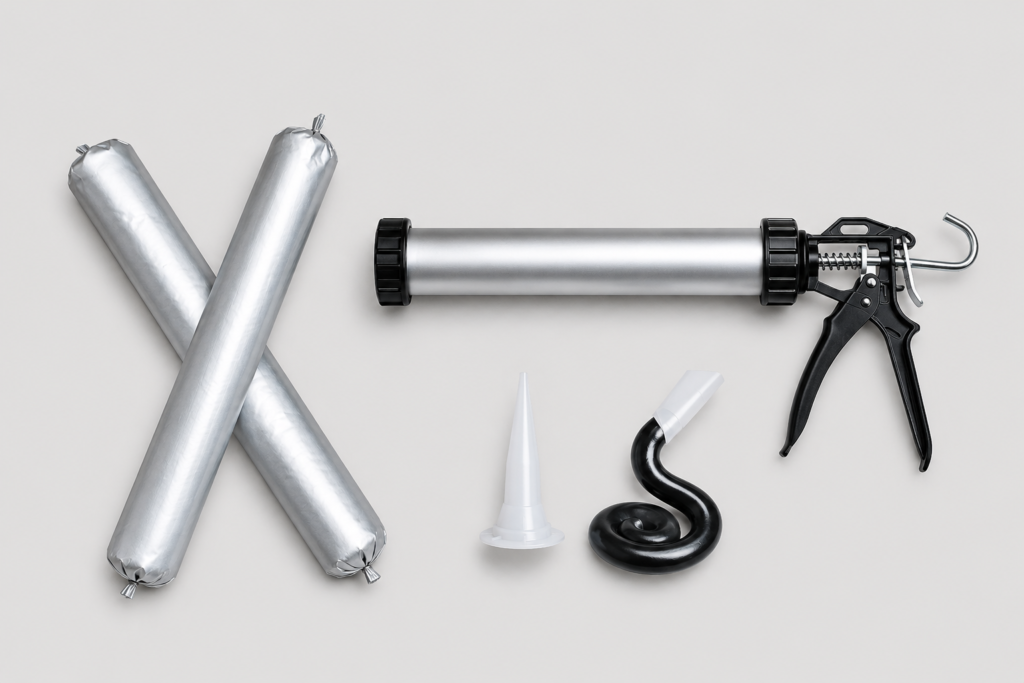
Cartridge or Sausage Sealant? How Distributors Should Choose a Pack Format
A practical pack-format guide for sealant distributors: compare cartridge and foil sausage options by customer workload, dispensing equipment, order pattern, stock and receiving checks.
Silicone vs Acrylic Sealant: Choose by the Joint
Use paintability, exposure, movement and the joint’s job to choose the right acrylic or silicone starting point—then verify the exact product.
How to Choose a Private Label Caulk Manufacturer: 10 Checks
A practical buyer checklist for comparing private-label caulk manufacturers across product fit, performance, packaging, samples, documents and repeat-order control.

Ready to evaluate CR210 for your market or interior application?
Share the substrate, gap or joint details, paint system, color, required size, quantity and destination market. We can review product fit and confirm the available size, color, document and sample requirements before quotation.
Include in Your Inquiry
1. Substrate and gap or joint details
2. Paint system and interior exposure
3. Color and required size
4. Quantity and destination market