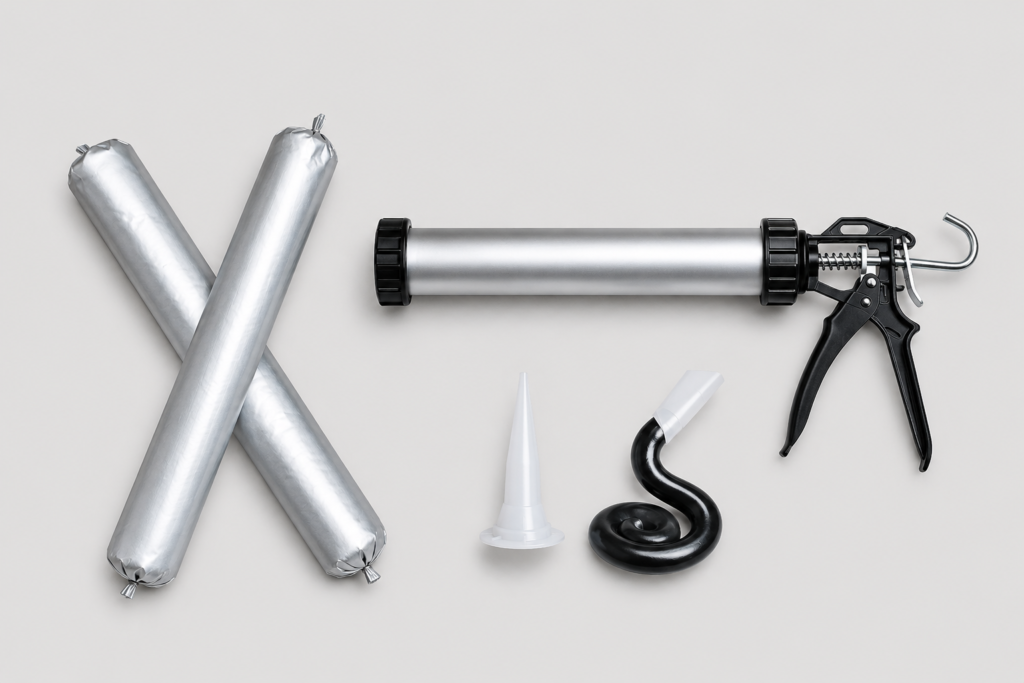

For distributors sourcing private-label construction caulk and sealant products in cartridges or sausages, price, MOQ and artwork are easy to compare—but they are still poor starting points. If the application, product type, performance evidence and approved sample are still vague, a low quote simply prices an undefined product.
The safer sequence is to create a written brief first, then compare manufacturers against it. A capable answer should tell you what is fixed, what depends on the project and which sample, document or check supports the claim. These ten checks help a distributor, importer or building-material brand decide whether a manufacturer is ready for that conversation.
1. Start With the Application, Not the Product Name
“I need neutral silicone” is not yet a product brief. Neither is “general-purpose caulk.” Those phrases leave out the joint’s job, both substrates, their coatings or finishes, interior or exterior exposure, water and cleaning conditions, expected movement, and the destination market.
Ask the manufacturer to convert your request into a written application brief. For a window perimeter, for example, the buyer should distinguish a paint-ready interior finishing gap from an exterior weather seal. A bathroom perimeter raises different questions from a facade joint, glazing detail or fire-rated system.
A normal answer asks for the missing conditions before naming a product. A warning sign is an immediate recommendation based only on a category name or target price. The trade-off is time: a proper application review takes longer than matching a catalog label, but it prevents you from comparing products designed for different jobs.
Our current products show why the distinction matters. CR210 acrylic sealant is positioned for paint-ready interior gaps, MR350 sanitary silicone for compatible sanitary interior wet-area joints, and WR550 weather-resistant silicone for compatible non-structural weather sealing. Those are different starting points, not interchangeable performance grades.
2. Test the Manufacturer’s Product-Selection Reasoning
A long catalog is not proof of technical depth. The useful test is whether the supplier can explain why one chemistry and product role belongs on the shortlist—and why another does not.
Ask how the manufacturer separates acetoxy and neutral-cure silicone, sanitary and general-purpose products, weatherseal and structural roles, and silicone from acrylic caulk. Then give the same application to two candidates and compare the questions they ask before quoting.
Listen for an explanation that connects cure type and product category to substrates, exposure, movement and the required evidence. A supplier should be comfortable saying that an unfamiliar substrate or special-use joint needs separate confirmation. A price ladder with no application logic—or one “premium” silicone presented as suitable for everything—does not answer the selection question.
A focused manufacturer may offer fewer relevant products but explain them well. A broader range provides more options, yet it also creates more samples and documents to compare. Judge the selection process, not the number of product names.
3. Define Performance Before You Negotiate Price
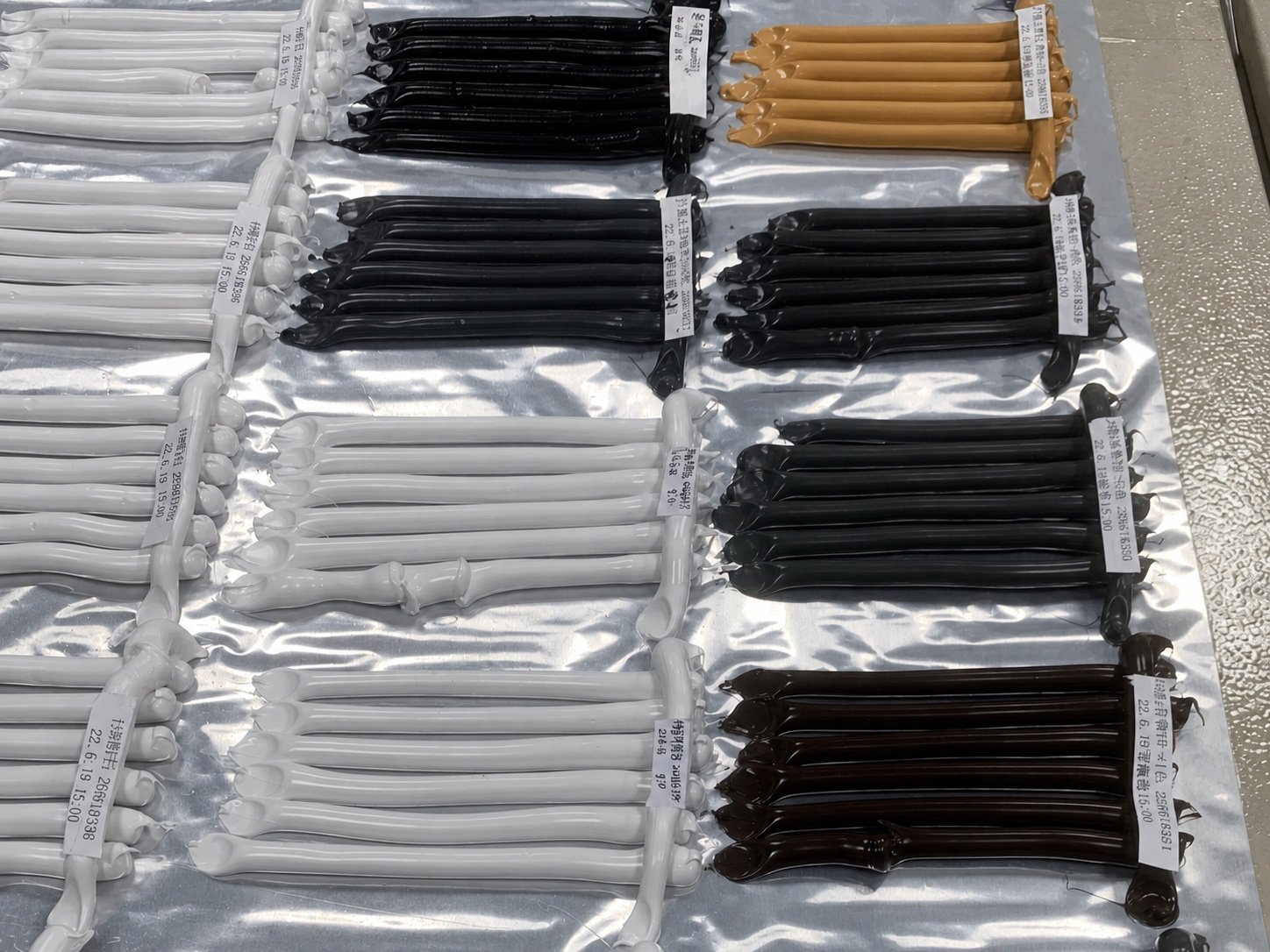
Do not send every parameter you have seen on a data sheet. Choose the few that decide the intended use, and record how each one will be evaluated. Depending on the product, that may include movement classification, adhesion to named substrates, sag, cure behavior, hardness, tensile or elongation data, color, or a sanitary claim with its actual test basis.
The important question is not “Can you make this cheaper?” It is “Which parts of this written performance brief remain the same at that price?” Ask the manufacturer to identify the exact product, test method, typical value or classification, sample conditions and tolerances that will appear in the offer.
A normal answer separates specification requirements from typical production data and refuses to guarantee a value it does not control or test. A red flag is a quotation that changes grade or formula language without updating the sample ID, TDS or written specification.
The trade-off is not simply cheap versus good. A product can be over-specified for a low-risk interior gap, while an exterior movement joint may need evidence that a generic caulk never had to provide. Price the defined role; do not ask the price to define the role for you.
4. Separate Standard Private Label From Product Development
“Custom” can mean several different things: a current formula in your branding, a color change, a different package, a market-language label, a revised performance target, or genuine formulation development. These scopes do not share the same evidence, cost or schedule.
Ask the manufacturer to mark every requested item as current, configurable, development work or unavailable. Require the quote to identify the product or formula reference behind the sample and the artwork revision behind the package.
A useful reply gives boundaries and explains which changes trigger new samples, documents or testing. If “anything is customizable” before the supplier knows the market, application or performance requirement, ask which exact product and development scope the quotation actually covers.
For many first orders, a mature existing formula reduces development work and comes with a clearer document set. Genuine development may better fit a distinctive market position, but every new variable needs its own approval. A packaging change should not quietly become a formula change—or vice versa.
5. Break MOQ Into Product and Packaging Constraints
There is no useful industry-wide MOQ for private-label caulk. The limiting quantity may come from the formula batch, color preparation, filling setup, cartridge or sausage supply, direct printing, labels, cartons or a raw-material purchase. The lowest number in a sales message tells you nothing about which constraint was removed.
Ask for an MOQ breakdown by exact product, color, package format, print method and carton. If the offer is unusually low, ask what will be standard rather than custom: a stock cartridge with a label, a shared carton, an existing color, or another confirmed configuration.
One practical way to test the quotation is to remove or simplify one custom element and ask what changes. The reply should show which component sets the minimum and how unit cost moves. If exactly the same MOQ appears for every formula, color and package, the constraint has probably not been explained.
For an early program, labels or standardized packaging may lower the initial inventory commitment. Direct-printed components can create a more integrated shelf presentation, but they may also create a separate stock exposure. Compare the complete configuration, not one headline number.
6. Check the Cartridge, Not Just the Sealant
Cartridges suit many retail and general-distribution channels because buyers recognize the format and standard cartridge guns are widely available. Foil sausages are often preferred for professional or higher-volume dispensing and create less packaging waste, but they require compatible equipment and different handling. The package format should therefore be part of the product brief, not an afterthought.
A Practical Cartridge Check Buyers Often Miss
In highly price-competitive markets, cost is not always reduced through the sealant formula. Sometimes it is taken out of the cartridge itself or the amount of product filled inside it.
We have seen cartridge differences that are surprisingly difficult to notice when the sample is viewed on its own. A slightly slimmer or shorter cartridge may still look normal in a photograph, especially to a buyer who does not handle sealants every day.
The easiest check is comparison.
Put the proposed sample beside a familiar product already sold in your market. Differences in body diameter, length and overall appearance become much easier to notice side by side. If the appearance of the finished product matters to your brand, confirm the cartridge dimensions before approving production rather than approving the artwork alone.
The piston at the bottom of the cartridge gives you another quick check. If two cartridges use the same package format and comparable sealant, but one piston sits noticeably farther inside the tube, it is worth checking the actual fill quantity.
A deeper piston does not automatically prove underfilling because cartridge design, piston geometry and product density can affect its position. But if the difference looks unusual, do not ignore it—compare it with the approved sample and verify the declared net content.
For a private-label project, the approved sample should therefore represent more than the sealant formula. Keep the cartridge format, appearance and expected fill quantity consistent as well.
7. Approve the Product, Artwork and Production Baseline Separately
A good bead sample does not approve a barcode. An approved carton proof does not approve cure behavior. Keep three sign-offs:
- Product sample: product/formula ID, color reference, application observations and any agreed test results.
- Packaging proof: brand and product names, language, warnings, claims, barcode, color, batch-code space and artwork revision.
- Production specification: the exact product and package IDs, approved references, inspection scope, traceability fields and rules for approving a deviation.

Ask whether the bulk order will use the same product identity and package configuration as the approved references, and how an unavoidable change will be disclosed. A normal answer creates one cross-referenced order file. A red flag is “same as sample” with no sample ID, date or written scope.
The trade-off is administrative simplicity versus reproducibility. One informal approval is faster. Three short, linked records make disagreements less likely and give the next buyer or quality reviewer something concrete to inspect.
8. Match Every Document to the Exact Product and Market
Request the TDS, applicable SDS, product specification and relevant test or validation evidence before the first order—not after the packaging claims are printed. Then check the identity chain: manufacturer, product/model, test standard, sample, result scope, issue date, destination market and private-label name where the program requires it.
An SDS supports hazard communication, not product-performance approval; OSHA’s Hazard Communication framework makes that role clear. A test report or validation record is useful only when the identified product, method and reported scope match the requirement. The SWR Institute validation program is one example of tying reported data to an identified sealant product.
Ask the supplier to map each proposed claim to the document that supports it and to flag any identity or scope mismatch. A thick certificate folder is not reassuring when the model, test, date or market cannot be connected to your order. A smaller set of matched records is often more useful.
Use Vesta Technical Resources to request current model-specific documents; availability and market scope still need confirmation.
9. Audit Repeat-Order Controls, Not Just the First Sample
The first sample is a development checkpoint. Your brand risk continues with the second order, a new raw-material lot, a color restart, a packaging reorder and any approved change.
Ask the manufacturer to describe the control chain in plain language: how incoming materials and batch identity are recorded; which in-process or finished-product checks apply to this product; whether a retained reference or sample policy exists; how color and package revisions are controlled; and how a deviation is investigated and communicated.
You should be able to see which records exist, who owns a decision and where a deviation is documented. The answer should also distinguish a process check from an application test. “Strict QC” adds little if the supplier cannot name the product-specific inspection scope, batch identifier or person responsible for an exception.
For a first order, this may feel less urgent than sample color or artwork. It becomes important when the same product is reordered months later. Not every interior caulk needs the same inspection depth as a specified facade sealant, but the controls should match the consequences of variation and be agreed before quotations are compared.
10. Check How the Factory Handles Custom Packaging
Private-label packaging is a useful way to judge whether a manufacturer has a mature OEM process. Once you send the artwork, pay attention to what happens before anything is printed.
A factory should not simply receive a logo or design file and reply, “No problem.”
The cartridge, sausage or carton format should first be confirmed. The artwork then needs to match the actual printable area, printing method and packaging specification. Important details such as product name, color, barcode, warnings, language and batch-code space should also be checked before the final file is released for production.
Before printing, there should be a clear version for the buyer to approve. Depending on the project, this may be a digital artwork proof, a printed packaging sample or another agreed reference.
This step matters because small packaging errors are expensive once thousands of cartridges or cartons have already been produced. A wrong barcode, outdated artwork or misplaced product claim cannot be corrected as easily as a PDF file.
Pay attention to version control as well. If the artwork changes after the first quotation or sample, make sure the factory can identify which version has been approved for production. Sending several revised files through email or WhatsApp without a final confirmed version creates unnecessary risk.
Be cautious if the supplier accepts the artwork and moves toward production without confirming the packaging specification, checking the final layout or asking for approval of the production version.
A mature private-label process should make it clear what will be printed, which file is final and who approved it before packaging production begins.
A Compact Buyer Checklist
Use this as the first page of your supplier comparison. Add the supplier’s evidence or reference beside each answer.
| What to check | What to ask |
|---|---|
| Application | What joint, substrates, finishes, exposure and movement are we defining? |
| Product route | Why this chemistry and grade rather than the nearest alternative? |
| Performance | Which fields and test bases must remain fixed? |
| Customization | What is current, configurable, development work or unavailable? |
| MOQ | Which product or packaging constraint sets the minimum? |
| Package | Does the approved sample match the cartridge format, appearance and expected fill quantity? |
| Approvals | Which IDs bind the product sample, artwork and production specification? |
| Documents | Do the TDS, SDS and reports match the exact product and market? |
| Repeat orders | Which batch, inspection, retained-reference and traceability records apply? |
| Custom packaging | Which packaging specification, final artwork version and approval reference will control production? |
Do not score this as ten yes/no boxes. The evidence beside the answer is what makes two suppliers comparable.
Prepare the Brief Before You Request the Quote
Before opening a private-label discussion, define six inputs: the application, product type, target performance, packaging, expected quantity and destination market. That is enough to expose the major unknowns without pretending the project is already approved.
We can compare that brief with our current products and tell you which packaging, sample, document and commercial questions still need project-specific confirmation. Formula availability, MOQ, lead time, certification, capacity and package feasibility remain subject to the exact brief.