
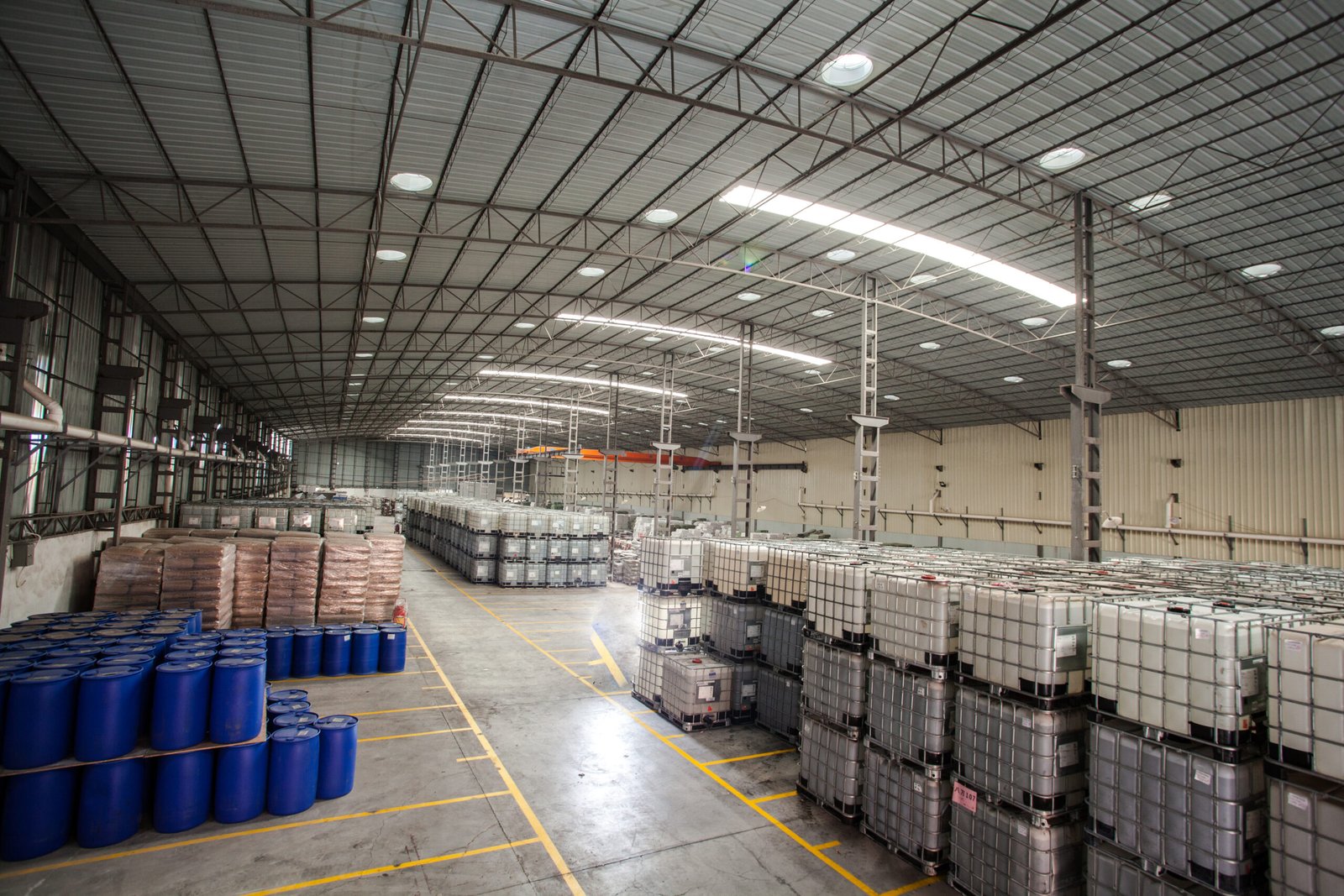
If you are importing silicone sealant from China, start with the supplier’s export process. Can the company turn one approved product, package and document set into a repeatable shipment? Once that is clear, define the product, application, packaging, quantity, destination, documents and storage assumptions. Then approve the sample and document pack, lock the purchase order and packaging revision, assign the shipment and customs handoffs, confirm destination-side requirements before dispatch and hold the goods at your warehouse until they match the approved order.
The first test is simple: can the supplier show the exact product, current documents, approved package, named shipment responsibilities and a clear receiving record? “Documents available,” “shipping included” and “same as the sample” are not answers until those details are written down.

1. Start with a buyer-ready import brief
Before comparing suppliers, convert the inquiry into a specification that another person can quote, sample and ship without guessing. “Silicone sealant for construction” is a category, not an order.
| Input to define | What to write down | Why it matters later |
|---|---|---|
| Product and cure type | Exact product category, cure type if known, model or proposed model | Prevents a generic label from being carried into the invoice, TDS or carton |
| Application | Joint or assembly role, substrates, finishes, interior/exterior exposure, water or weather conditions | Determines which product path and compatibility questions need review |
| Package | Cartridge, sausage, pail or another format; declared net content; carton and pallet route | Allows sample, artwork, packing list and receiving checks to refer to the same package |
| Quantity | Trial/sample quantity and estimated bulk quantity, separated | Keeps a small trial from being mistaken for a confirmed production order |
| Destination | Country or market, named delivery point, importer of record and intended warehouse | Gives the buyer and broker the information needed to confirm local requirements |
| Storage and timing | Intended storage conditions, receiving window and any shelf-life or rotation requirement | Prevents a shipment plan from ignoring the time between production, transit and use |
If the application is a curtain-wall perimeter, for example, start with the Curtain Wall application path and then match the product to its exact document and project approval.
2. Evaluate the supplier before placing the order
Before you compare prices, find out what kind of supplier is quoting and what it can carry into production. A factory and a trading company can both be workable. The useful question is whether the quote, sample, documents and shipment come from one controlled chain.
Ask each candidate to answer these questions in writing:
| Supplier question | What a useful answer looks like |
|---|---|
| Who is quoting? | Factory or trading company, production site, document issuer and person responsible for the order |
| Can it make the exact sample? | Same cure type, color, package, net content and label route as the proposed order |
| What documents can it issue? | Current model-specific TDS/SDS, COA or batch record, packaging proof and agreed origin documents |
| What is the quotation based on? | Product, package, MOQ, lead time, Incoterm, named place, freight basis, validity and included charges |
| How do payment terms work? | Deposit, balance trigger and any inspection, document or shipment milestone |
| How is a batch traced? | Lot coding, production record, retain-sample or complaint contact and the record sent with the shipment |
| Can it manage OEM packaging? | Artwork revision, label language, net content, carton/pallet arrangement and approval owner |
| What happens when something changes? | No product, package, artwork, document or shipment change goes into production without written approval |
A low quotation becomes expensive when the package, MOQ, lead time or freight basis changes after approval. Compare quotations line by line, then ask each supplier to reissue one final version using the same product and delivery assumptions. Keep the selected quotation with the approved sample and document pack; it becomes the order baseline for the handoffs below.
3. Approve the sample and document package before bulk production
A sample is not only a bead of sealant. It is a reference for the product, package, color, label, identification and document revision that the buyer intends to order. Approve the sample against the use described in the brief, then carry those details into the order record.
Request a document pack for the exact model and market. Depending on the transaction and destination, this may include:
- the current Technical Data Sheet (TDS);
- the applicable Safety Data Sheet (SDS) in the required language or market version;
- a Certificate of Analysis (COA) or batch-related quality record where applicable and agreed;
- commercial invoice and packing list drafts;
- packaging specification, label artwork and shipping-mark instructions;
- batch/lot and shelf-life information where applicable;
- bill of lading or airway bill information and shipment advice;
- origin documentation when required by the buyer, destination, letter of credit or preferential arrangement.
These documents do different jobs. Use Vesta Technical Resources to request current model-specific technical and safety documents. A commercial invoice describes the sale and value, a packing list itemizes the cargo, and transport documents record the carriage. Ask the buyer or broker early which documents they need for customs clearance.
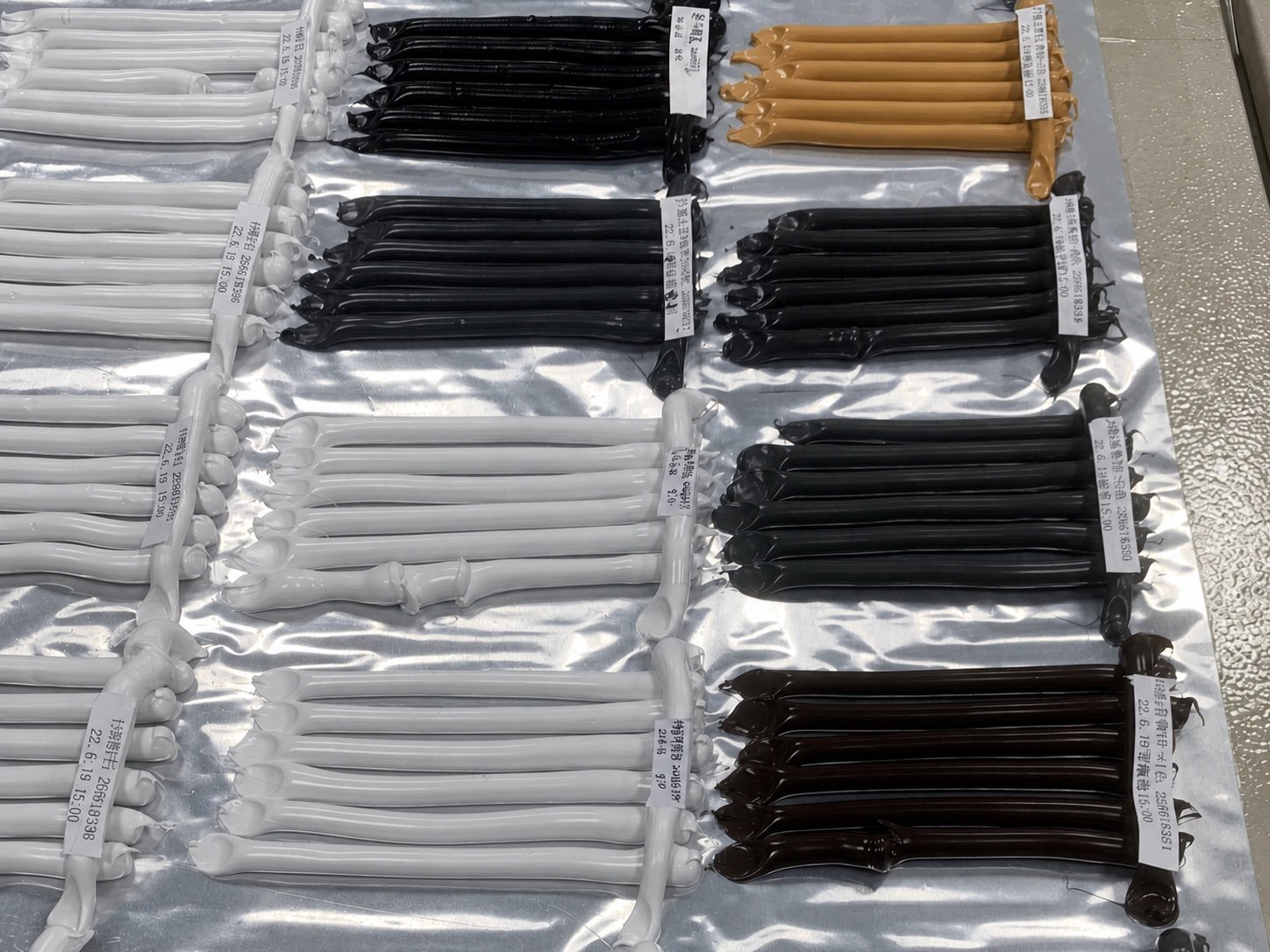
When comparing a TDS, SDS or COA, check the exact product name, model, revision, language, market, lot or batch reference and intended use. Do not copy a value from one model into another. A document request is complete only when someone can answer: “Which file applies to this order, and who confirms that it is the current one?”
4. Lock the purchase order, packaging and change control
The purchase order should turn the approved sample and document discussion into a controlled release record. It should identify the product, package, color where relevant, net content, units per carton, carton/pallet arrangement, labels, language, shipping marks, destination reference and document requirements that have actually been agreed.
Packaging control deserves its own approval. Compare the approved cartridge or sausage with the production format, then compare the approved artwork with the printable area and actual label. Check the product name, model, color, net content, batch-code space, language, warnings and barcode or shipping reference when they are part of the order.
Set a written change rule before production begins. A changed product model, cure type, package, label, net content, carton, pallet pattern, document revision or batch-control method should not be treated as a harmless update. The PO or change log should state which changes require written approval and who can give it.
For a private-label order, the OEM & Private Label page remains the commercial owner for the cooperation path. This article adds the import handoff: the final artwork, packaging specification and document responsibility must be the same versions that the supplier carries into production and shipment.
Stop before production if the factory can quote the order but cannot identify the approved sample, final artwork, package specification, document revision or change approver.
5. Write the shipment handoff instead of saying “shipping included”
An Incoterm is not a synonym for freight included. The exact rule and named place allocate important responsibilities and the point at which risk transfers. ICC describes Incoterms 2020 as rules that allocate buyer and seller responsibilities for transport, delivery, costs, risk and export/import formalities. Its checklist shows why containerized shipments, terminal handoffs and arrival contracts can lead to different choices.
Write the following into the order or shipping instruction:
- the exact Incoterm and named place;
- who books the forwarder and who receives the booking confirmation;
- where the supplier hands the goods to the first carrier or nominated transport point;
- who prepares export documents and export clearance where applicable;
- who sends the commercial invoice, packing list, transport document, origin evidence and shipment advice to the buyer and broker;
- who is the destination-side customs broker or clearance contact;
- who pays the agreed freight, local charges, duties and taxes under the contract;
- what happens if the carrier, broker or authority asks for a corrected document.
Choose EXW, FCA, FOB, CIF, DAP or DDP from the actual shipment structure, named place and parties’ capability—not from a price label.
6. Confirm destination-side requirements before the shipment leaves China
The supplier controls the product, safety, batch and shipment documents it has agreed to provide. The buyer, importer of record and broker should confirm the destination declaration, document and origin requirements before ordering and shipping.
Use the six-digit HS code as a research starting point
The Harmonized System (HS) gives internationally comparable six-digit product codes. The first two digits identify the chapter, the first four identify the heading, and digits five and six identify the subheading. Countries can add national digits after the six-digit level, and the final import classification is made under the destination country’s tariff schedule. The World Customs Organization’s HS overview and HS FAQ explain this structure.
For many formulated products sold as caulking compounds or mastics, 3214.10 is a useful six-digit starting point. The WCO HS 2022 Chapter 32 listing places caulking compounds and other mastics under 3214.10. U.S. Customs and Border Protection has also classified specific silicone caulk and silicone-based sealant examples under the U.S. national extension 3214.10.0010 in its CROSS classification results. Use the destination extension for the declaration.
| Six-digit starting point | General description | How to use it in the investigation |
|---|---|---|
3214.10 |
Caulking compounds and other mastics; painters’ fillings | Start here when a finished, formulated product is sold and entered as a caulking compound or mastic; confirm the national extension and product fit |
3214.90 |
Other products within heading 32.14 | Use when the product belongs in heading 32.14 but outside the caulking/mastic subheading |
3506.10 |
Products suitable for use as glues or adhesives, put up for retail sale, not exceeding 1 kg net weight | A practical code used in our customer shipments for retail-packed adhesive products within the weight limit; confirm the destination extension and declaration wording |
3506.91 |
Adhesives based on polymers of headings 3901 to 3913 or on rubber | Compare when the product’s composition and function fit a prepared-adhesive classification |
3506.99 |
Other prepared glues and adhesives | Compare for a prepared adhesive not elsewhere specified or included |
3910.00 |
Silicones in primary forms | Use for silicone raw materials in primary forms |
The current U.S. HTS entries show how a country can extend the six-digit HS structure, while also listing neighboring headings such as 3506.10, 3506.91, 3506.99 and 3910.00. In our customer shipments, 3506.10 is a familiar clearance path for qualifying retail-packed adhesive products. Start with the six-digit heading, then ask the destination broker or customs authority which national digits, product description, composition and package facts belong on the declaration and whether the code connects to import controls.
If preferential treatment is part of the buying assumption, confirm the exact scheme, product rule, accepted proof, issuer, format, deadline and fallback before the order is placed. The WTO rules-of-origin gateway and World Customs Organization origin guidance are useful starting points.
In our experience with a Vietnam-bound shipment, a customer importing silicone sealant required strict customs classification. The availability of a valid Certificate of Origin mattered to the customer’s expected preferential treatment, but the supplier could not provide the required original. During clearance, the expected tariff reduction was not obtained and the customer suffered a major financial loss. The procurement lesson was straightforward: confirm who is responsible for the document, the required format or original, the submission deadline and the fallback before placing the order.
7. Use simple shipping marks and keep them aligned with the documents
Shipping marks should help people identify a carton, pallet or package and check it against the document set. UN/CEFACT Recommendation 15 describes a simple standardized approach intended to reduce costs, mistakes, confusion and shipment delays.
Before the final packaging release, compare the agreed marks across:
- the carton and pallet;
- the packing list;
- the commercial invoice or purchase-order reference;
- the transport booking and shipment advice;
- the buyer’s warehouse receiving record.
At minimum, the internal receiving key should let the warehouse connect the shipment to the buyer, product/model, package format, carton or pallet count, net content, batch/lot and destination reference. If a language, barcode, warning, expiry or handling mark is required by the destination or buyer, confirm it with the responsible party before printing it.
8. Make warehouse receipt a clear-or-hold decision
Arrival at the warehouse is not the same as release into inventory. The first check is visible and countable; the next check is whether the physical shipment matches the approved order.
| Receiving check | Compare against | Hold or investigate when |
|---|---|---|
| Carton, pallet and package count | Packing list, purchase order and carrier record | Count or package type does not reconcile |
| Visible damage and leakage | Transport condition and receiving photos | Cartons are crushed, wet, leaking or opened without a recorded reason |
| Product and label identity | Approved sample, artwork and PO | Model, color, language, label or net-content statement differs |
| Batch/lot and shelf-life information | Shipment advice and agreed document pack | Identification is absent, unreadable or inconsistent |
| Document match | Invoice, packing list, transport document and origin record where applicable | Description, quantity, marks, consignee or origin evidence conflicts |
| Sample/order match | Approved sample and signed release record | Physical product or package is not the one approved for bulk production |
Record the result before putting the goods into normal stock. If a mismatch is visible, isolate the affected cartons or lot and ask the responsible supplier, forwarder or broker for a written resolution. Do not silently relabel a shipment or treat a corrected email as if it changed the original approval record.
9. Define stop conditions before the first payment
The easiest time to stop an unclear import is before it becomes a production, freight or clearance problem.
| Stage | Stop before moving on when |
|---|---|
| Before payment | Product, application, package, quantity, destination, delivery point, document responsibility or storage assumption is still vague |
| Before production | Sample, product document, packaging proof, PO revision or change approver is not approved |
| Before shipment | Batch/lot, carton/pallet count, shipping marks, document pack, Incoterm/place or destination requirements are not reconciled |
| During customs clearance | Broker identifies a mismatch in classification, origin evidence, document format, consignee or declared goods |
| At warehouse receipt | Count, damage, leakage, labels, lot, shelf-life information or sample/order match fails |
Where Vesta fits in the process
Once the application and document questions are defined, review the WR550 Weather-Resistant Silicone product page alongside the Curtain Wall application path when that is the actual project role. For a private-label package, use the OEM & Private Label route. For current model-specific technical files, use Vesta Technical Resources.
Common mistakes to remove from the order process
- Choosing a product from a category name before describing the application.
- Approving a sample without recording its product ID, package, color or evaluation scope.
- Treating the TDS, SDS, COA, invoice and packing list as interchangeable documents.
- Assuming a supplier’s standard Certificate of Origin is the same as the destination’s required proof for a preference.
- Writing “FOB China” or “shipping included” without a named place and handoff record.
- Sending several artwork revisions and assuming the factory knows which one is final.
- Checking carton count but not checking model, lot, label, leakage or sample/order match at the warehouse.
Frequently asked questions
Can a supplier’s document pack guarantee customs clearance?
Use the supplier’s pack to prepare the shipment, then have the buyer, importer of record or broker confirm the destination declaration and origin records.
Do I need a Certificate of Origin for every import?
Check with the buyer or broker before ordering if origin affects your cost or clearance plan. Confirm the accepted issuer, format, deadline and fallback.
Is 3214.10 the universal HS code for silicone sealant?
3214.10 is a useful six-digit starting point for many finished caulking compounds and mastics. For qualifying retail-packed adhesive products, our customer shipments commonly use 3506.10. The destination tariff schedule supplies the national extension and declaration wording.
Which Incoterm should I use when importing sealant from China?
Choose the Incoterm from the named place and actual responsibilities. Write who handles export, main carriage, import clearance, duties, documents and delivery into the contract.
Ask for a product and document review
If you want our Application Support team to review the import route, send the destination country or market, product and application, packaging format, estimated quantity, target delivery point, required document package and whether you need a sample or quotation. We can compare those inputs with the relevant product, application and current document path; your broker and destination authority handle customs filing, legal certification and duty treatment.