
Does silicone caulk expire? The short answer
Does silicone caulk expire? Yes—unused silicone caulk has a limited shelf life. As a rough starting point, many unopened one-part construction silicones are labeled for about 9 to 12 months in the original package under the stated storage conditions; some products may state a longer period. The exact number still depends on the formulation, packaging, storage conditions and the manufacturer’s date basis.
In U.S. search language, “silicone caulk” often refers to silicone sealant supplied in a cartridge; for the terminology difference, see our silicone sealant vs caulk guide.
For a buyer, the more useful question is not only “What is the shelf life?” It is how much shelf life will still remain when the product arrives, enters inventory or is assigned to a project. Start with the product and batch, confirm when the clock starts, calculate the remaining life at the decision point, and check whether the package and storage history support the next step.
A cartridge that looks normal or still extrudes has passed only a narrow screen. Use the sequence below to decide whether the stock is ready for your next review step or needs to be held.
What does “expired” actually mean for silicone sealant?
An expiry, use-by or best-use-before date is not a chemical cliff where silicone is normal one day and suddenly unusable the next.
It marks the end of the manufacturer’s validated shelf-life window under the stated packaging and storage conditions. Within that window, correctly stored material is expected to meet its specified requirements. Once that date has passed, the sealant does not suddenly become useless. It simply means the original shelf-life guarantee has ended, so the material has to be judged by its actual condition and the performance required for the job.
Shelf aging is progressive. Extrusion behavior, cure speed, cured mechanical properties and adhesion can change at different speeds. So the better question is: what still needs to be checked before we use this batch?
Four different clocks buyers should not mix
“How long does silicone last?” can refer to four different periods. Mixing them produces bad purchase and inventory decisions.
| Which situation? | What are you deciding? | What to look at |
|---|---|---|
| Unopened package | Can this sealed stock still be received, sold or issued? | Exact model, date basis, package condition and storage |
| Opened package | Can this partly used tube be stored? | Opening date and the product’s own instructions |
| Applied sealant | Is the material still workable and curing normally? | Working, skin and cure time; see the silicone cure-time guide |
| Installed joint | How is a finished joint likely to perform over time? | Installation, exposure and the old-silicone decision guide |
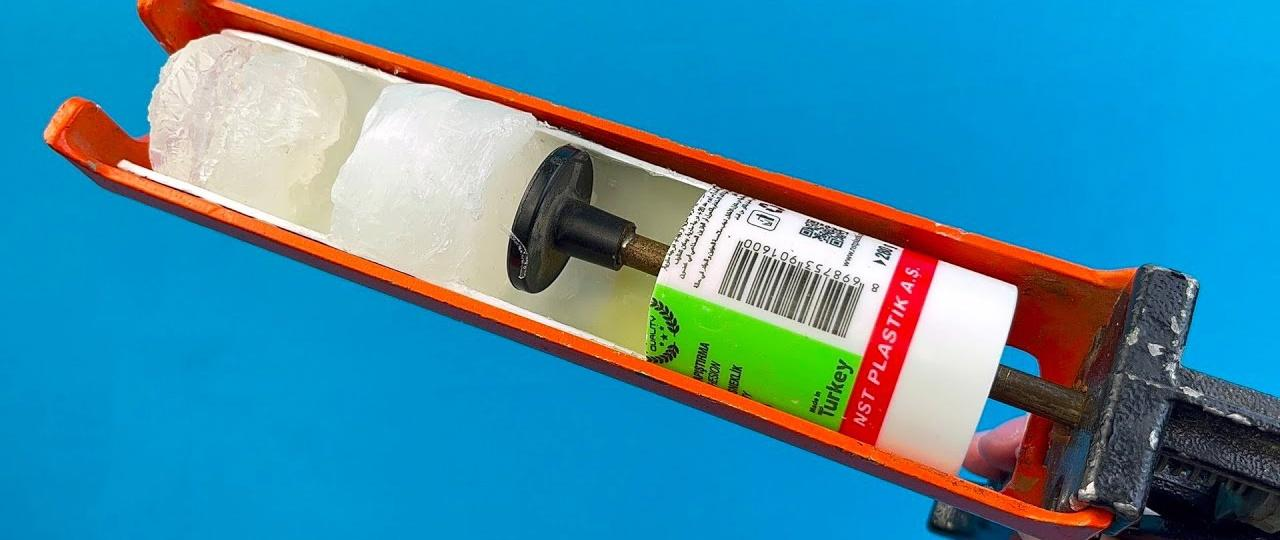
If someone asks how long caulk lasts “in the tube,” first establish whether the package is unopened or previously opened. An unopened TDS value should not be carried over after the original seal has been broken.
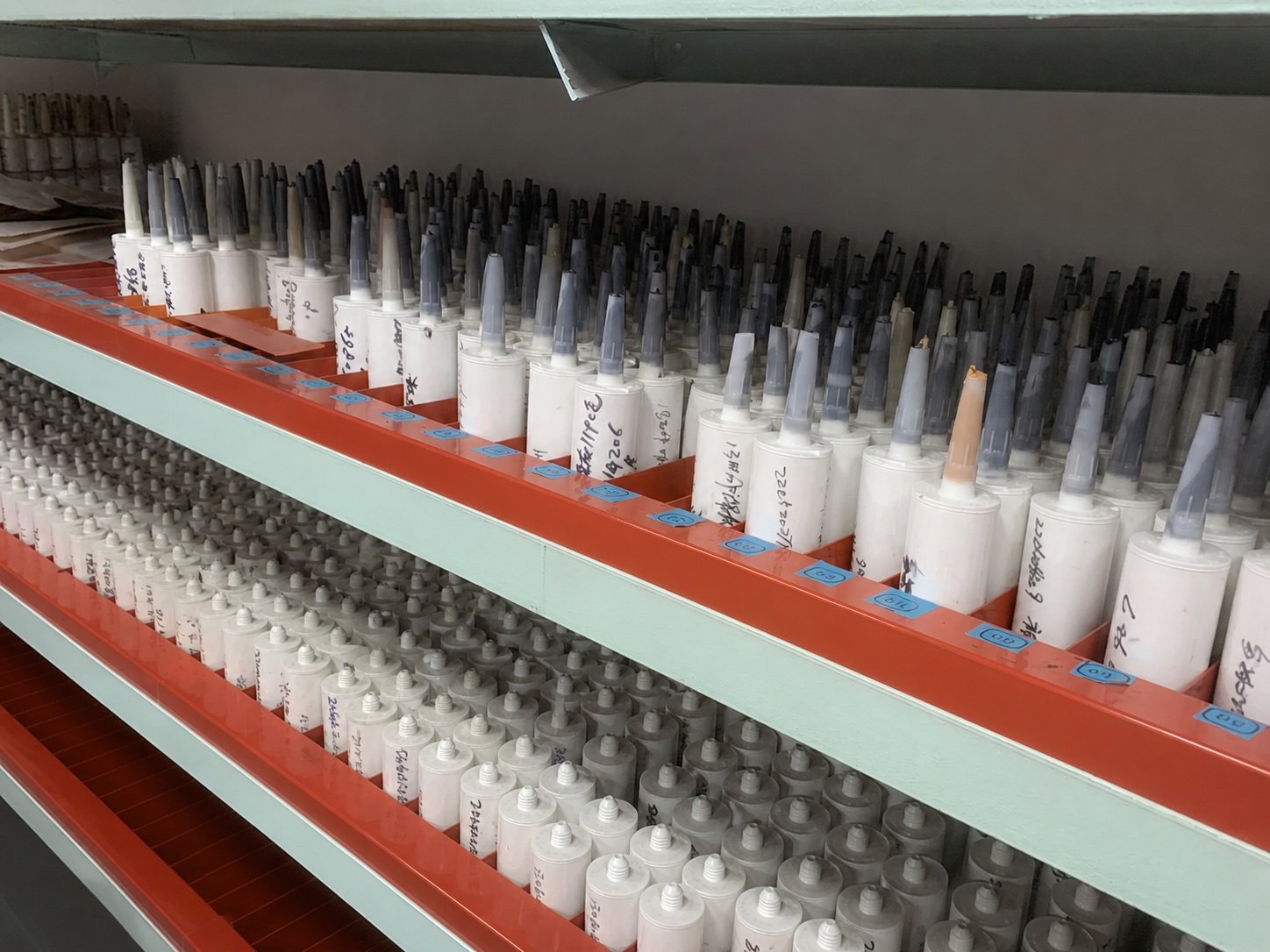
Why a sealed one-part silicone package can still age
One-part silicone is designed to stay uncured inside moisture-resistant packaging and cure after exposure to atmospheric moisture. Storage stability therefore depends on both formulation stability and package integrity.
Shelf life is product-specific. If a cartridge, crimp or foil package is split, punctured or leaking, segregate it before evaluating the material.
What speeds up the aging process?
- Heat: accelerates storage-aging reactions and can raise cartridge temperature far above ambient conditions.
- Moisture: damaged seals, condensation or package defects can expose uncured material to water vapour.
- Uncontrolled cold or freezing: treat any storage history outside the product’s specified range as an exception requiring review.
Why 12 months depends on the whole system
A 12-month shelf-life claim comes from the whole system, not one “anti-expiry” ingredient. Formulation stability, residual moisture, filling control, packaging barrier and storage conditions all contribute to the final result.
At production level, moisture control can include dry raw materials, closed mixing, controlled filling, vacuum or deaeration where used, and dry process air or gas. Each step reduces the chance of premature reaction before the sealant reaches the cartridge; none of them makes a moisture-curing formulation indefinitely stable.
How we validate silicone shelf life in our factory
A shelf-life claim is not based simply on leaving a cartridge on a shelf and checking whether it can still be opened months later.
In our factory, we evaluate shelf stability by comparing fresh material with stored or accelerated-aged samples under controlled conditions. The exact plan depends on the formulation and product, but the logic is consistent.
We first examine the uncured material for changes in appearance, uniformity, consistency, viscosity and extrusion behavior. We then check the cure profile. Skin-over or tack-free time is useful, but surface cure alone is not enough; cure in depth matters because a sealant can form a skin while the material underneath cures abnormally slowly.
After full cure, Shore A hardness, tensile strength and elongation can be compared with fresh material. Where bonding performance matters, adhesion is a separate check. What we want to know is simple: has storage changed the sealant enough to matter?
That is why we do not stop at appearance or extrusion. We follow the material from the uncured state, through cure, and finally into the properties of the cured rubber.
| Stage | What is checked |
|---|---|
| Fresh vs stored sample | Same formulation under defined conditions |
| Uncured material | Appearance, consistency, viscosity and extrusion |
| Early cure | Skin-over and tack-free behavior |
| Cure development | Through-cure or cure in depth |
| Fully cured material | Shore A hardness, tensile strength and elongation |
| Application-specific check | Adhesion or other required properties |
Accelerated aging can reveal formulation instability much faster than normal warehouse storage. Its conditions are formulation-specific, however; a certain number of days at elevated temperature cannot be converted into one universal number of months for every silicone sealant.
What actually changes as silicone ages?
Shelf aging does not have one universal failure mode. Some sealants gradually become thicker and harder to extrude. Others can still look normal during application while their cure profile becomes slower. In more serious cases, the surface may react while the material deeper inside remains soft or uncured.
| What you may observe | What it may indicate |
|---|---|
| Heavier or slower extrusion | Viscosity or rheology has changed during storage |
| Progressive thickening | Small amounts of premature reaction may be occurring inside the package |
| Localized hardened material | Premature cure has started in part of the cartridge |
| Fine particles or a slightly granular bead | A formulation or curing-agent stability issue may be involved; crystallization has been documented in some acetoxy RTV-1 systems |
| Longer skin-over or tack-free time | The cure profile has shifted |
| Surface skin but soft material underneath | Cure in depth has become abnormally slow |
| Material still extrudes but does not cure normally | The cure chemistry has deteriorated even though application initially looks acceptable |
| Changes after full cure | Hardness, tensile strength, elongation or adhesion may no longer match fresh material |
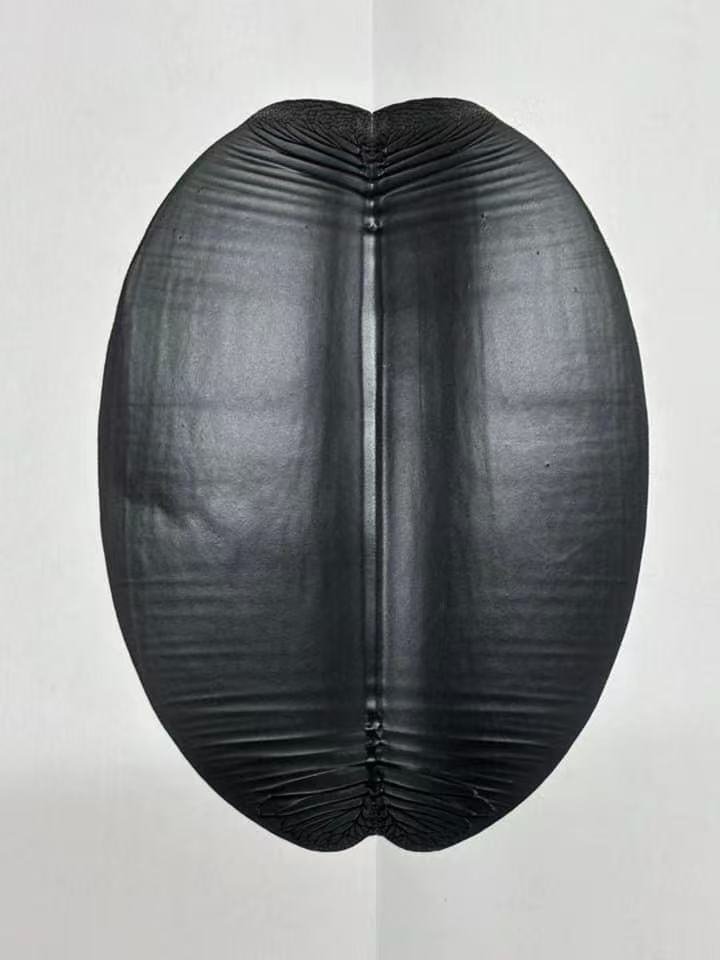
One storage-aging pathway in moisture-curing sealants is gradual reaction caused by trace moisture. Rather than becoming “expired” at once, the material may slowly increase in viscosity until extrusion becomes noticeably more difficult. Other formulations fail differently: some can still come out of the cartridge while their ability to cure becomes weaker.
A sealant can still gun normally and already be failing
One of the most misleading ways to judge aged silicone is simply to squeeze some out of the cartridge.
In our experience, shelf aging does not always make the material completely hard inside the package first. With mature oxime-neutral formulations, we more often see a gradual sequence: extrusion becomes heavier, cure becomes slower, localized material may eventually begin to solidify, and only after much more extensive aging does the whole package become unusable.
We have also seen both oxime-neutral and alkoxy-neutral materials that could still be extruded but no longer cured normally afterward. A customer using a lower-grade neutral-cure product reported an especially clear example near the end of its storage life: the exposed surface reacted, but the material deeper inside failed to cure normally.
We are not the only ones who have seen this. Shelf-aging tests on RTV-1 silicones have recorded the same pattern: the material can still come out of the cartridge while cure becomes slower or eventually fails.
What each check actually tells us: Extrusion → skin or tack-free behavior → cure in depth → cured mechanical properties → adhesion to the actual substrate → application-specific durability.
A sealant can pass the first check and still fail the next one.
Why acetoxy, oxime-neutral and alkoxy-neutral silicones can age differently
Cure chemistry influences how storage problems can appear, but chemistry alone does not determine shelf life. Raw-material moisture, filler treatment, crosslinker balance, catalysts, scavengers, production control, packaging and storage temperature all affect the result.
| Cure system | Storage-aging behavior worth watching | What we have seen in practice |
|---|---|---|
| Acetoxy | Premature moisture reaction, viscosity change and curing-agent stability; crystallization has been documented in published acetoxy RTV-1 work | Older material can become harder to extrude, and we have sometimes seen fine particles or a slightly granular bead |
| Oxime-neutral | Cure profile can drift during storage even when the material remains extrudable | In mature formulations, poorer extrusion and slower cure usually appear before complete in-cartridge solidification; with much longer aging, localized solidification can develop and spread |
| Alkoxy-neutral | Some catalyst and end-group systems can progressively lose cure capability during shelf aging | We have seen material that still extrudes with a normal-looking appearance but later cures abnormally slowly or incompletely |
Acetoxy silicone responds quickly to atmospheric moisture, but that does not mean every acetoxy formulation has a short shelf life. It means moisture control, curing-agent stability and formulation balance matter during storage. With old acetoxy material, we have sometimes seen fine particles in the bead. We have not analyzed those particles, so I would not claim they are definitely crystallized curing agent. A similar crystallization pattern has also been reported in acetoxy RTV-1 shelf-aging studies.
With neutral-cure products, the more deceptive failure is often cure rather than appearance. Both oxime and alkoxy materials can still extrude while curing progressively more slowly. That is why we pay more attention to cure behavior than to whether the cartridge simply still guns.
The practical lesson is not that one chemistry always lasts longer than another. Different formulations can reveal shelf-aging failure in different ways.
If aged silicone still cures, is it still good?
A complete cure is a good sign, but it is not the whole answer.
In published shelf-aging tests, some stable formulations kept hardness and elongation close to fresh material while tensile strength or cure behavior shifted. Adhesion can change separately: in one Alclad comparison, peel adhesion was about 66 psi after normal cure, 67 psi after three months of room-temperature storage and cure, and 16 psi after 90 days at 50°C before cure.
So for old stock, I would look at cure first, then mechanical performance and adhesion if the application actually depends on them. For long-term exterior weathering, I would not assume the original performance without evidence.
How we recommend storing silicone sealant
For unopened stock:
- Keep the original package sealed and within the product’s stated storage temperature range.
- Keep cartons dry, covered and away from direct sunlight, heaters and hot roofs.
- Keep stock off damp floors and away from condensation, leaks and wet walls.
- Avoid stacking or handling that damages cartridges, plungers, crimps or foil closures.
- In cold regions, do not leave cartons overnight on an unheated loading dock or in a parked vehicle.
- Avoid repeated hot-cold swings and freeze-thaw cycles, even when the cartons still look undamaged.
- Separate lots and record known heat, moisture or freezing events.
- Rotate usable stock by reliable expiry information, but never use stock rotation to override a storage abnormality.
These measures do not extend a printed expiry date. They protect the remaining shelf life by reducing avoidable heat, moisture, frost and package damage.
A cold-weather storage lesson from Kazakhstan
We have seen this happen in a real customer order. A customer in Kazakhstan bought a batch of silicone sealant, but the material was not stored properly during winter. The whole batch froze. After it was thawed, its performance had changed and the customer could not treat it as normal stock.
The lesson for cold-climate buyers is simple: decide where the material will be stored before the shipment arrives, keep it within its stated temperature range and put any batch with a freezing history aside for review. Warming cartons back to room temperature does not automatically restore the original performance.

What life is left when the shipment arrives?
The total shelf-life number on a TDS is useful, but it is not the number a distributor lives with. The number that affects the next decision is the remaining shelf life at arrival—and later, the amount left when the stock is sold or assigned to a project.
For example, a product with a 12-month shelf life that was made one month before dispatch has about 11 months left when it leaves the factory. The arrival window then depends on the actual route—ocean freight, customs clearance and receiving. If those steps take two or three months, the buyer receives it with roughly 8–9 months left. The buyer should also reserve part of that window for its own sales cycle; if selling through the stock normally takes three to six months, that time should be included in the order plan.
When the package has a clear expiry or use-by date, the check is simple:
remaining shelf life at arrival = expiry date − arrival date
If the product says its shelf life runs from the manufacture date, calculate the expiry from that date. If the record only says “12 months,” ask when the clock starts before calculating. For a label that shows only month and year, confirm how the supplier treats the date rather than choosing a month-end rule yourself.
In our export inquiries, buyers often start with “How many months is the shelf life?” The more useful question is: How much life will still be left when the goods arrive, and will that window cover the buyer’s next step?
If you are importing sealant from China, prepare this route before the order is placed. Our guide to importing silicone sealant from China covers the factory-to-warehouse sequence; use it together with the product’s date basis and the buyer’s required arrival window.
Put the remaining-life requirement in the purchase order
For distributors and importers, shelf life is easier to manage when the requirement is agreed before production rather than argued about after the shipment arrives.
Instead of writing only Shelf life: 12 months, define the parts of the requirement that affect the order.
| Purchase requirement | What should be defined |
|---|---|
| Declared shelf life and start date | Exact period and the date from which it starts |
| Minimum remaining life | The acceptable balance at shipment and, if agreed, at arrival |
| Date and batch traceability | Legible manufacture/expiry information and lot or batch identification tied to production records |
| Mixed-age or short-dated stock | Whether different dates may ship together and when buyer approval is required |
| Storage exception and disposition | How known heat, moisture, freezing or package damage is handled, and what happens if the requirement is missed |
Set the values for the actual route, inventory cycle and application. There is no universal rule that every buyer should demand the same number of remaining months.
A receiving screen for cartridges and sausages
At receipt, treat manufacture and expiry fields as time evidence, the lot or batch as traceability, and storage records or package photos as condition evidence. A lot becomes a date only when the exact product’s written rule explains how to decode it. If a code is unreadable or unclear, send the label photo to the supplier before accepting the stock.
Here’s the receiving check we recommend when shelf life or package condition is in question.
| If you see | We recommend |
|---|---|
| Model, market version, lot and date are legible and match the order | Continue to the remaining-life and storage checks. |
| Date or lot is missing, unreadable or unexplained | Hold the affected quantity, photograph the label and ask for the missing record. |
| Stock is beyond an explicit expiry or use-by date | Hold it and ask the responsible supplier or project authority for the next step. |
| Arrival life is below the agreed requirement | Treat it as a commercial exception: return, replace or obtain the agreed disposition. |
| Cartridge, crimp or foil closure is split, punctured, leaking, swollen or badly deformed | Segregate the stock, photograph the condition and contact the supplier. |
| Carton or transport record shows a serious storage abnormality | Keep the evidence with the batch and review it against the order requirements. |
| The package looks normal | Finish the date, storage and product checks before release. |
We check both cartridges and sausages because either package can lose its original condition. The cartridge-versus-sausage guide covers which format to buy; this page covers the evidence on the package you received.
For an application such as windows and doors, the exact product, substrates, joint design, compatibility and project requirements still control the selection.
How long does opened silicone caulk last, and how should you store it?
Once a one-part silicone cartridge has been opened, try to use the remaining material relatively soon. As a practical rule of thumb, we would aim to use a properly resealed cartridge within about 30 days. A well-sealed cartridge can often remain usable for 30–60 days, and sometimes longer.
- Within 30 days: this is our preferred use window. A cartridge that was resealed promptly is usually worth checking and using.
- Between 30 and 60 days: the material may still be usable, but check extrusion and cure before it goes into the job.
- Beyond 60 days: the cartridge is not automatically unusable, but we would not plan normal commercial inventory around it. For important exterior, movement or structural applications, use fresh material instead.
Silicone cures by reacting with atmospheric moisture, so the main goal after opening is to limit further moisture exposure. Insert a clean screw or nail into the nozzle, then seal the tip tightly with plastic film or aluminum foil. Use a proper sealing cap when one is available. Keep the cartridge upright in a cool, dry place away from heat and direct sunlight, and mark the date it was opened. These handling steps are consistent with manufacturer guidance for opened cartridges.
If the cartridge has been stored for several weeks, remove any cured material from the nozzle and check for abnormal thickening or difficult extrusion. Then make a small test bead and confirm that skin formation and cure in depth develop normally before using the material on the job.
The 30–60 day range is our practical handling guideline. Actual usable time depends on formulation, resealing quality and storage conditions.
Storage-life comparison by sealant type
Current Vesta product records below show why buyers should use the exact model’s shelf-life statement rather than applying one generic number to every sealant.
| Product | Chemistry role in this comparison | Controlled shelf-life statement | Controlled storage/package statement |
|---|---|---|---|
| EX230 acetoxy silicone | Silicone example | 12 months | Unopened original packaging at +5°C to +25°C; cool and dry; protect from direct sunlight and excessive heat; verify batch, manufacture and expiry before use |
| MR350 sanitary silicone | Silicone example | 12 months | Original unopened package, dry conditions, +5°C to +25°C |
| WR550 weather-resistant silicone | Silicone example | 12 months from manufacture | Original, unopened and undamaged packaging at +5°C to +27°C; follow label manufacture and expiry information |
| CR210 acrylic sealant | Acrylic chemistry contrast only | 18 months from manufacture | Original unopened packaging at +5°C to +25°C; cool, dry and ventilated; protect from frost, sunlight and excessive heat |
I would not use shelf-life months as a quality score. CR210 carries an 18-month statement while the three silicone products above state 12 months, but that does not make acrylic a “better” sealant or mean the three silicones age identically. Declared shelf life is a product-specific window shaped by formulation, manufacturing control, packaging and storage conditions.
What to send for a shelf-life and batch review
For a useful batch review, send:
- the exact product or model, chemistry and destination market;
- the current TDS or label shelf-life statement, including its date basis and storage/package conditions;
- clear photos of the manufacture, expiry or use-by fields and the lot or batch number;
- the package type, package condition and photos of any damage, swelling, leakage or broken closure;
- the affected quantity and the order, dispatch, arrival and planned-use dates;
- any available storage or transport records, including known heat, moisture or freezing events; and
- the decision you need to make: buy, receive, resell, allocate or raise the batch for project review.
We will match those details to the current product record and identify any questions that still need the supplier or project owner.
Frequently asked questions
How long does unopened silicone caulk last?
For the Vesta silicone products covered here, current records state 12 months under the specified conditions. Other products may differ, so use the exact model’s current record and date basis.
Can I use silicone caulk after the expiry date if it still comes out of the tube?
No. It only proves the sealant can still be dispensed. Cure speed, cure in depth and adhesion can already have changed.
Can silicone still be bad if it cures on the surface?
Yes. Surface skin formation and cure in depth are different checks. Shelf-aged material can form a surface skin while curing much more slowly underneath.
Does acetoxy or neutral-cure silicone have a longer shelf life?
Not by chemistry alone. Acetoxy, oxime and alkoxy systems can age differently, but the actual shelf life is product-specific. Use the shelf-life statement for the exact product.
Is a lot number the same as a manufacture date?
Not automatically. A lot or batch number gives us traceability. If you need the manufacturing date, send the label photo and ask for the exact product’s written decoding rule.
Which sealant stock should a warehouse use first?
If reliable expiry dates are available, use the stock that expires soonest. If you only know the receiving or production sequence, use the oldest stock first. Quarantined or project-specific lots should follow their own disposition instead of either rotation rule.