
By Ethan · Technically reviewed by Vesta Technical Team · 2026-10-24 · 15 min read
Start With This Quick Incoming Inspection Checklist
A finished silicone sealant order should pass two separate gates. Before dispatch, verify that the finished lot matches the order and is ready to ship. At receipt, inspect the goods that actually arrived before they enter saleable inventory. Do not copy the factory result into the warehouse record; transit can change the count, packaging and visible condition.
Use this short checklist first, then use the sections below to define the evidence and action behind each result.
| Check | Before dispatch | At receipt | Hold when |
|---|---|---|---|
| Product identity | Match product, SKU, cure type where specified and color to the PO and approved reference | Recheck the delivered units and mixed-SKU separation | Identity is wrong, missing or unreadable |
| Package and declared content | Match cartridge/sausage format, printed content and units per carton | Compare the received package and label with the approved version | Format or declared content differs |
| Quantity | Count cartons, pallets and units against the packing list | Record the quantity physically received | Shortage, overage or an unexplained mixed count appears |
| Package condition | Check closures, leakage, deformation, carton strength and pallet stability | Record wet, crushed, opened, punctured or leaking packages | The affected quantity cannot be identified or protected |
| Labels and marks | Confirm unit label, carton artwork, origin mark and warehouse mark | Check that marks remain readable and match the delivery | A required label or warehouse identifier is absent or wrong |
| Lot and date | Record lot/date codes and any agreed minimum remaining-life requirement | Keep mixed lots separate and compare dates with the written order requirement | Codes are missing, inconsistent or outside the agreed requirement |
| Documents | Match the packing list, invoice, current SDS and any required batch document to the exact product | Match any required COA or batch document to the received lot | A required document is missing, stale or tied to another product or lot |
| Disposition | Record release, correction, reinspection or stop | Record accept, partial release, hold, reject, claim or technical review | Nobody has authority to close the discrepancy |
The quick rule is: set the comparison and sampling rule before inspection, then inspect again before signing and put-away.

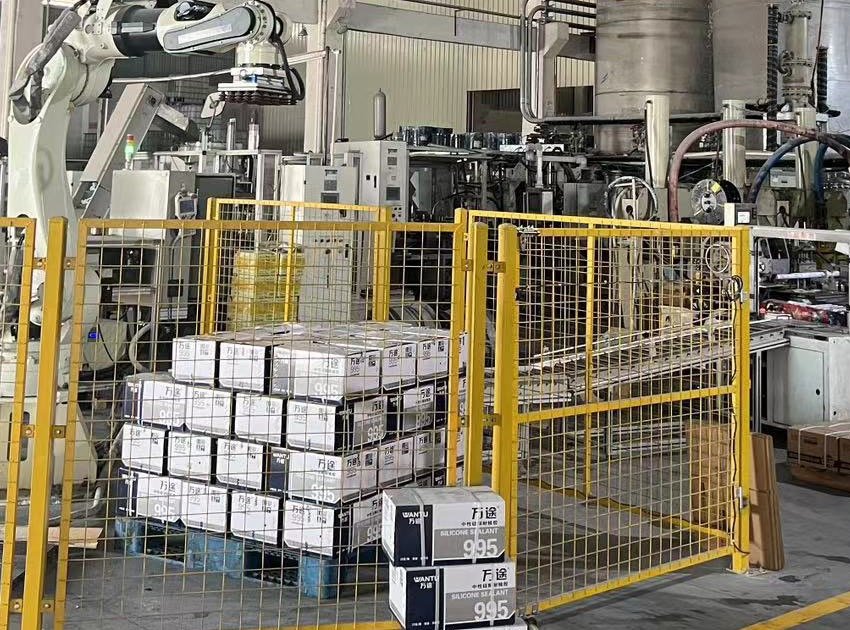
At receipt, photograph and isolate visible damage before the cartons are opened or distributed.
Build One Comparison File Before the Factory Ships
The inspector, forwarder and warehouse should not be working from different versions of the order. Put the following fields in one current comparison file:
| Field | What to lock before inspection |
|---|---|
| Order identity | PO, supplier, exact product/SKU, color and approved sample ID or scope when applicable |
| Package | Cartridge or sausage format, declared net content, units per carton and approved label/artwork revision |
| Finished quantity | Units, cartons, pallets, net/gross weight and dimensions |
| Traceability | Required lot/date code and any written minimum remaining-life requirement |
| Marks | Country-of-origin treatment confirmed for the destination, plus the warehouse or consignee mark |
| Documents | Packing list, invoice, current SDS and any named COA or batch document |
| Inspection decision | Lot definition, characteristics to inspect, sampling rule, acceptance rule and person authorized to release or hold |
Name the actual product rather than writing only “neutral silicone.” For example, an order for WR550 Weather-Resistant Silicone should remain tied to that model. If the approved use is window or door perimeter work, keep the relevant details from the Windows & Doors guide with the order reference. If the exact model documents are missing, request the current market version through Vesta Resources.
Send the draft packing list and transport details to the forwarder before booking. Include the product description, pack type, carton and pallet data, weight, dimensions, ready date, pickup details, marks and current SDS. The word “silicone” does not determine transport classification. PHMSA places classification and description responsibility on the offeror, so obtain written confirmation that the selected carrier and warehouse will accept the exact cargo and route.
In our export work, this early check prevents an avoidable surprise: some carriers or warehouses decline chemical products as an internal policy even when the cargo is not being offered as regulated dangerous goods. The complete import guide covers the wider factory-to-warehouse process; the purpose here is to give every inspection party the same shipment reference.
Define the Lot, Sample and Acceptance Rule Before Inspection
“Check a few cartons” is not an inspection plan. Before anyone sees the finished goods, write down:
- The inspection lot: the quantity covered by one decision, including the product, color, package and lot boundaries.
- The characteristic: what is being checked—for example identity, label, leakage, declared content, carton condition or a named measurement.
- The selection rule: whether every shipping unit is checked or which agreed sampling plan selects the units.
- The acceptance rule: what result releases the lot, what triggers correction or reinspection and what requires a hold.
- The record: which cartons, pallets, lots or units were inspected and who made the decision.
If your contract uses acceptance sampling by attributes, apply the selected scheme and its actual sample-size and acceptance/rejection rules. ISO 2859-1 describes AQL-indexed sampling schemes, but it does not supply one universal AQL or sample count for every sealant order. Choose the plan from the product risk, defect classification, contract and quality procedure before inspection; do not change it after the results are visible.
The same boundary applies to fill. Matching a printed 300 mL statement across the quotation, label and carton is a document check. Determining actual net content is a measurement task. NIST Handbook 133 uses defined procedures and suitable measurement precision for packaged-goods checks. Do not treat cartridge dimensions or an improvised weighing result as a legal compliance decision.
Inspect the Product and Packing Before Dispatch
If you have a trusted colleague or inspector near the factory, ask them to visit before loading. Give them the comparison file and sampling rule instead of a vague instruction to “check the quality.” Record the six lanes separately:
| Inspection lane | What to compare or observe | Typical hold trigger |
|---|---|---|
| Product identity | Product/SKU, specified cure type, color and approved reference | Wrong or unresolved product identity |
| Quantity and declared content | Units per carton, carton count, pallet count and printed content | Count or declaration does not match the controlled file |
| Unit package | Cartridge/sausage format, closures, leakage, deformation and exterior contamination | Leaking, open or visibly compromised units |
| Labels, cartons and marks | Unit label, carton artwork, origin mark, warehouse code and pallet sequence | Missing, unreadable or wrong revision |
| Lot and date | Lot/date code and any written remaining-life requirement | Missing/mixed code or failure against the agreed requirement |
| Documents | Packing list, invoice, SDS and any required COA/batch document | Missing, wrong-revision or wrong-lot document |
In our packaging and supply work, a quoted pack size is not enough to release an order. We have seen a 280 mL pack presented as 300 mL and a 500 mL pack presented as 600 mL. That is why the commercial description, unit label, packing list, carton mark and approved reference must agree. If they do not, hold the affected scope and decide whether document correction is enough or a measured-fill check is required.
Protect the cargo without losing identification
Choose palletized or floor-loaded handling from the full delivered cost, not freight cube alone.
- Palletized cargo uses more volume but can reduce manual handling. Keep cartons inside the pallet footprint, protect vulnerable corners, wrap the load into a stable unit and leave at least one pallet label visible. Ask for top and side photographs before loading.
- Floor-loaded cartons use the container more flexibly but create more manual touches. Confirm who will unload and count them, how mixed SKUs or colors will be separated and which loading photographs the factory must provide.
If the product package itself is still undecided, settle that choice through the cartridge-versus-sausage guide before specifying how the finished cartons will travel.
Where the packing specification calls for it, carton straps can help keep cartons closed and make handling easier. Set the tension so the straps do not crush the box, cover the marks or cut into pallet corners. Use edge or corner protection before the final bands or transparent stretch wrap.
For US imports, 19 CFR 134.11 sets the general country-of-origin marking requirement, while the correct article or container level depends on the actual import and ultimate-purchaser path. Ask the broker to confirm where “Made in China” must appear. Separately, give the factory the destination warehouse mark in writing so the receiving team can identify the owner, PO, SKU and pallet or carton sequence.
Before the goods leave, photograph representative unit labels, carton marks, lot/date codes, all pallet sides and corners, straps or wrap, the loading sequence, vehicle or container number and final seal where applicable. Record open corrections and reinspect them before release.
Inspect Delivery Damage Before You Sign
The receiving team needs the packing list, expected delivery date, carrier reference and a short count summary before the truck arrives. Confirm the dock appointment, unloading equipment or labor and a marked hold area for damaged or unidentified goods.
Before unloading, match the vehicle or container number to the delivery record. If a seal number is part of the shipment, photograph it before opening and record any mismatch. Photograph the doors, visible external damage and the first view of the cargo.
During unloading, count the units as they are physically handled. Record pallets and cartons separately when the commercial packing list is reconciled by carton. Stop and photograph leaning pallets, torn wrap, crushed corners, wet or punctured cartons, loose cartons and visible leakage before the condition changes.
Do not sign a clean delivery receipt when visible shortage or damage exists. Write the actual exception: “2 cartons short on pallet 4,” “1 carton wet at lower corner” or “pallet wrap torn and 3 cartons crushed.” A generic “subject to inspection” note is less useful than a count and visible condition. Photograph all sides before opening and keep the original packaging; the notice and claim deadlines come from the actual carriage, insurance and purchase terms.
Inspect the Received Sealant Lot Before Inventory Release
Move damaged or unidentified goods to the hold area before normal put-away. Then work from the outside inward:
- Reconcile pallet, carton and unit counts with the packing list and delivery receipt.
- Match the PO, shipping marks, SKU, color, package, printed content and units per carton.
- Record every visible lot/date code and keep mixed lots separate.
- Compare production, expiry or best-before information with the written order requirement, including any agreed minimum remaining life. Do not invent a new threshold at receipt.
- Open the cartons selected by the agreed inspection plan and compare the units with the approved reference.
- Check cartridges or sausages for leakage, deformation, broken closures and contaminated exteriors.
- Match any required COA or batch document to the received lot and confirm that the current TDS/SDS names the exact product.
A pass in one lane must not clear another. A clean carton does not establish formula or application performance, and a COA tied to the lot does not approve every substrate or project. It establishes the document result required by the order.
Do not automatically repeat the complete sample-approval program on every shipment. If the order requires extrusion, cure, adhesion or another performance check, the product, sample, method, conditions and acceptance criteria must already be named. If a receiving discrepancy creates a new performance concern, hold only the affected scope and use the silicone sealant sample testing checklist or the formal method required for that decision.
Hold, Claim or Release the Exact Affected Quantity
Record the exact cartons, pallets or lots affected by a discrepancy. This keeps good stock from being blocked unnecessarily and prevents held stock from being allocated by mistake.
| Status | Warehouse action | Who must close it |
|---|---|---|
| Accept / release | Put the identified quantity into normal stock | Authorized receiving or quality owner |
| Partial release | Release named good cartons or lots; keep the affected scope segregated | Buyer-defined release authority |
| Hold | Block allocation and preserve the goods and evidence | Named quality, procurement or claim owner |
| Repack / relabel / reinspect | Complete the agreed correction and record the new result | Person authorized to approve the corrected scope |
| Reject / return | Keep the quantity segregated for return or disposal instruction | Contractually authorized buyer, supplier or insurer party |
| Technical review | Hold the scope that depends on a product or application decision | Qualified technical reviewer |
For a freight claim, keep the PO and delivery reference, container/trailer and seal details, packing list, expected-versus-received count, annotated delivery receipt, wide and close photographs, SKU/color/lot/date, affected quantity, hold location and notice references. Keep the damaged goods and original packaging until the responsible claim or quality owner authorizes disposal. For concealed damage found after opening, stop distribution, photograph the internal condition and notify the responsible party promptly.
Use This Shipment and Incoming Inspection Record
Copy this record into the order file before inspection. The same header follows the shipment, but the factory and warehouse results remain separate.
Common reference and sampling plan
| Field | Record |
|---|---|
| PO / supplier / exact product, SKU and color | |
| Approved sample ID or scope, if applicable | |
| Pack format / declared content / units per carton | |
| Lot definition / lot and date requirements | |
| Characteristics to inspect / defect classes | |
| Sampling scheme / selection rule / sample size | |
| Acceptance, reinspection and hold rules | |
| Required packing, label and document revisions | |
| Release and hold authority |
Part A — Before booking and dispatch
| Field | Record |
|---|---|
| Carton count / net and gross weight / dimensions | |
| Palletized or floor-loaded / reason | |
| Pallet count / dimensions / gross weight, if used | |
| Current SDS / transport reference | |
| Forwarder and warehouse acceptance / date | |
| Origin-marking requirement confirmed by | |
| Warehouse mark / PO / consignee code | |
| Straps / corner protection / wrap instruction | |
| Six-lane inspection results / photo references | |
| Release / correct / reinspect / stop; owner and date |
Part B — At destination receipt
| Field | Record |
|---|---|
| Delivery date / carrier / container or vehicle / seal | |
| Expected and received pallets, cartons and units | |
| Delivery-receipt exception wording | |
| Pallet/carton condition and photo references | |
| Product/SKU/color/package/declared-content result | |
| Lot/date/remaining-life requirement result | |
| Leakage, closure and visible unit-condition result | |
| Required COA/TDS/SDS or batch-document result | |
| Sampled units and any named measurement/test reference | |
| Affected quantity and hold location | |
| Claim or notice references | |
| Accept / partial release / hold / rework / reject / technical review | |
| Decision owner / due date / closure reference |
Planning a bulk silicone sealant order? Send your product type, estimated quantity and destination market. We can help you discuss packaging, inspection documents and OEM options before ordering.
Submit those details through Wholesale Silicone Sealant. If you already have an order or discrepancy, add the package, label, document and photo details so the open confirmation is clear. The forwarder, customs broker, carrier, warehouse, insurer and your authorized quality owner retain their respective transport, customs, claim and inventory decisions.