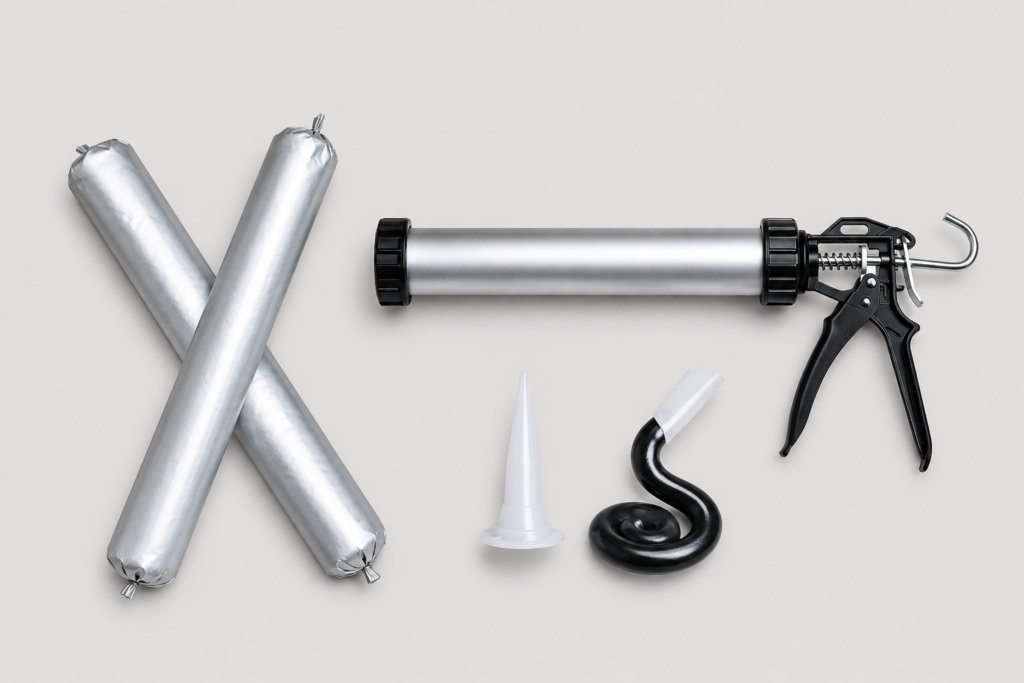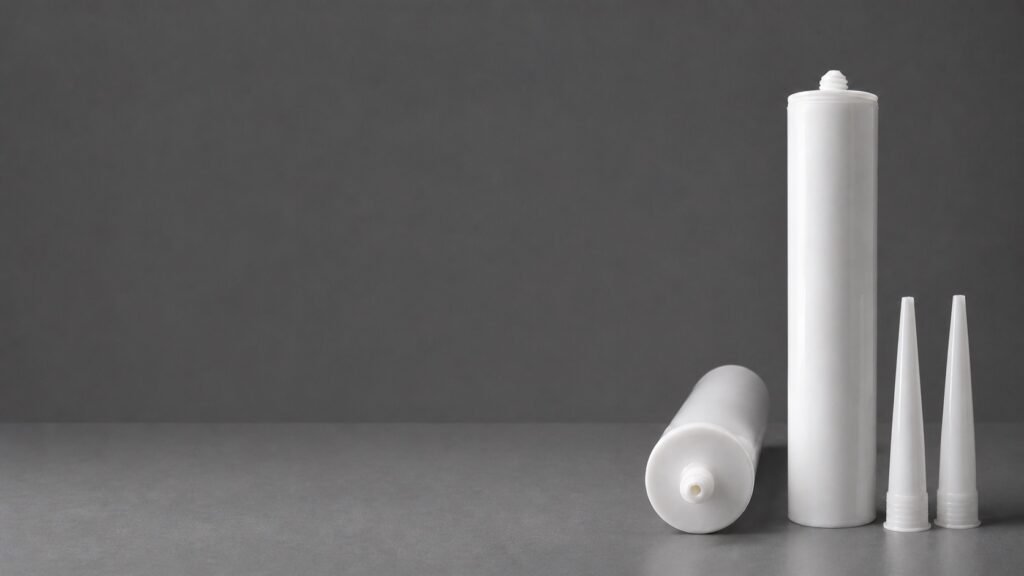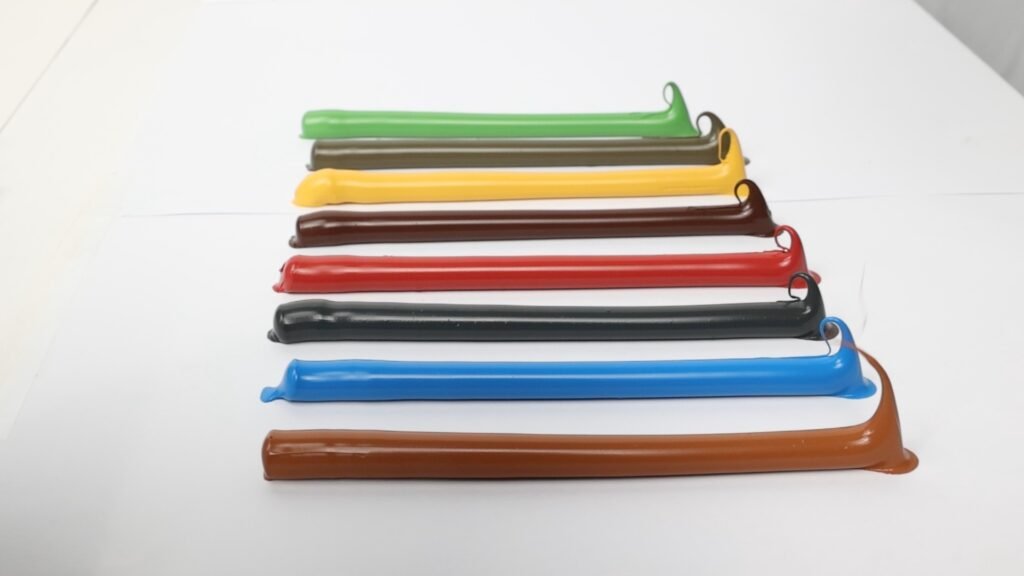

A sealant sample is ready for a bulk-order decision only when the record answers five questions: What does this sample represent? What was it compared against? Under what conditions? What passed or remains open? Who approved that exact scope?
A clean cartridge or a good-looking bead is not enough. It may tell you something useful about handling or appearance, but it cannot silently approve the product identity, every substrate, the packaging, the artwork, the documents and later bulk production at the same time.
In our experience, “same as the sample” is not enough to release a bulk order. If the sample has no ID, date and written approval scope, the buyer and supplier can end up referring to different product, color, package or document versions.
The practical rule is simple: identify the sample, define the approval scope, record the result and carry that same reference into the order.
Before You Test, Decide What This Sample Represents
Two cartridges that look similar may serve completely different approval purposes. One might be a stock reference supplied quickly. Another might be a custom color sample, a proposed private-label package or a pre-production unit intended to match the bulk order.
Assign a sample ID before the review begins. Then write what the physical sample does and does not represent.
| This sample may represent | It does not represent unless stated |
|---|---|
| Exact product or proposed model | Every product sold under a similar description |
| Submitted color reference | Final printed color name, artwork or screen appearance |
| Cartridge or sausage format | Final net content, carton, pallet or shipping configuration |
| Named application and actual substrate combination | Universal adhesion or compatibility on other finishes and materials |
| Current TDS, SDS or agreed document revision | Future document updates or claims not tied to the sample |
| Pre-production configuration | Every later production lot or shipment |
Record the proposed product/model, cure family where relevant, color, package format, sample date, batch or lot if available, intended application, substrates and finishes. If the supplier already knows that production will differ, list those differences before testing. Do not ask for a proprietary formula; the goal is to control the buyer decision, not to reverse-engineer the product.
If you are still deciding whether the supplier and its private-label process are credible, complete that work through the private-label caulk manufacturer checklist before treating a sample as an order baseline.
A typical version mismatch is easy to create. A stock cartridge may be used for the handling trial, while the bulk order later moves to a custom package. If the record says only “same as sample,” one side may think the color and dispensing were approved while the other assumes the cartridge, label and document version were approved too. Separate those fields before the trial, then carry only the accepted versions into the order.
Use This Silicone Sealant Sample Testing Checklist
Do not start by cutting the nozzle. Start by making the comparison repeatable.
Read the current label, TDS and SDS, and follow the stated ventilation, handling and personal-protection instructions. Prepare the actual substrate or a representative piece with the same finish. Record the cleaning or preparation method, gun and nozzle, intended bead or joint dimensions, temperature and humidity, comparison reference and planned observation times. If you are comparing two samples, keep those inputs—and preferably the operator and technique—the same. Change one intended comparison variable at a time.
Complete the agreed acceptance standard column before applying the sealant. Use the product instructions, purchase requirement, physical reference or named project method that actually controls the decision. Do not invent one universal number for every silicone sealant.
| Check | Practical method | Agreed acceptance standard | Result |
|---|---|---|---|
| Packaging and identity | Match the sample ID, model/color, package, declared net content, label and lot/date when present to the request; inspect for leakage or visible damage | Write the exact version and arrival condition required for this review | Pass / Hold / Resample + note |
| Extrusion | Dispense through the same gun and nozzle opening; compare start-up, continuity, interruptions and subjective gun force with the agreed reference | State the comparison sample or product-specific requirement; use a named method if a measured extrusion rate is required | Observation + conditions |
| Skin formation and tooling window | Start a timer at application; at planned intervals record when the bead becomes difficult to tool and when the surface reaches the agreed touch condition | Use the current product instruction or named method, with temperature and humidity recorded | Time + observation |
| Cure behavior | Prepare a separate sacrificial bead or specimen with fixed dimensions; inspect it after the product-specific waiting period | State the required waiting period, specimen dimensions and comparison condition | Observation + elapsed time |
| Adhesion on the intended substrate | Use the actual substrate and finish with the agreed preparation; choose either a representative buyer trial or the named manufacturer/laboratory/project method | Write the substrate, preparation, cure state, reviewer and pass criterion appropriate to the decision | Result + failure observation or formal report reference |
| Sag or bead shape | Apply the agreed bead on the intended orientation and photograph or measure the shape at fixed times when needed | Define the acceptable shape, comparison reference and observation interval | Observation + photo/reference |
| Appearance | Compare color, bubbles, voids, surface and cured appearance under agreed viewing conditions | Name the physical color/reference sample and the defects or variation that would trigger review | Pass / Open + note |
| Documents | Match the TDS, SDS and any agreed report to the exact model, revision, language and target market | List the document names and revisions required for the order | Complete / Missing / Mismatch |
Run the checklist in four stages
| Stage | Keep constant or confirm | What to record |
|---|---|---|
| Before opening | Sample identity, requested approval purpose and prepared substrates | Arrival condition, damage or leakage, identity mismatch and a dated photo when useful |
| During dispensing | Gun, nozzle opening, operator/technique and target bead size | Start-up, continuity, interruptions, visible inconsistency and relative gun force |
| During tooling and early surface cure | Tooling method, application time and observation intervals | Bead shape, slump, gaps or voids, workable tooling window and skin/tack progression |
| After the product-specific waiting period | Bead or specimen dimensions and recorded curing conditions | Section cure when planned, surface appearance and the result against the written reference |
Hand-gun feel is a useful comparison, but it is not a measured extrusion rate. ASTM C1183/C1183M controls the nozzle, pressure, time and measured volume. ASTM C679 addresses tack-free time at the surface; it does not show that the full bead has cured. One-component silicone cures from the exposed surface inward, and bead thickness, temperature and humidity change that progression.
Hold the sample when its identity is unresolved, the package is leaking or visibly compromised, the intended substrate or preparation was not used, or the trial cannot produce a consistent specimen. Record what happened, then clarify the sample, repeat the controlled setup or request a replacement instead of guessing at the cause.
Keep Four Review Results Separate
A long checklist still fails when one good result is allowed to close everything else. Keep four review lanes and give each one its own result, open items and owner.
| Review lane | What to verify | What to record |
|---|---|---|
| Product identity and reference | Sample ID, proposed model, cure type where relevant, color, date/lot if available and intended approval role | The accepted product reference and any excluded formula, color or lot |
| Application and substrate observation | Named use, actual substrates/finishes, preparation, dispensing/tooling observations and any agreed representative trial | Conditions, result, open technical question and responsible reviewer |
| Package and label | Package format, body dimensions/appearance, declared net content, seal, label identity and fields intended for the order | Accepted package fields plus any artwork, carton or fill item still open |
| Documents and revisions | Exact model on TDS/SDS, revision/date, market/language, agreed claims and any required test/report identity | The document set that applies to the order and any missing revision |
Use Vesta Products to confirm the exact current product identity, and use the Applications library to define the actual joint and substrate combination before you set application criteria. For a detailed document comparison, follow the silicone sealant TDS guide.

Know When a Buyer Check Must Become a Formal Test
Not every sample needs a laboratory package. Not every desk or workshop trial can answer a technical approval question either. Use the lowest evidence level that can support the actual decision.
Level 1: Recorded buyer observation
Use this for identity, visible condition, package/label checks, comparison with an agreed physical reference and basic handling observations. Record what you saw and the conditions.
Level 2: Controlled representative-use trial
Use the actual intended substrate and finish when available. Fix the preparation, application conditions, cure state and comparison reference before the trial. This can reveal a practical mismatch and help decide whether the sample is worth advancing.
Level 3: Named manufacturer, laboratory or project test
Escalate when the decision depends on:
- adhesion approval for a specific project or critical substrate;
- compatibility with gaskets, setting blocks, coatings or adjacent materials;
- staining on natural stone or another appearance-sensitive substrate;
- structural load, glazing, warranty or specification compliance; or
- any requirement that names a standard, method or qualified reviewer.
Formal requests use representative materials and separate adhesion, compatibility and stain questions because they answer different questions. The method, sample preparation, cure/conditioning, result and failure mode must be interpretable by the responsible authority. Use the complete current method rather than improvising from a short online description.
The proportional approach avoids two costly mistakes: accepting a high-risk application from a quick bead trial, and demanding a formal facade test program when the actual decision is only whether the proposed cartridge, color or label matches the order brief.
Turn the Test Record Into One Approval Decision
When all four lanes have been reviewed, choose one status. “Looks good” is not enough for purchasing, technical, quality or sales teams to know what they can release.
| Decision | Use it when | Next action |
|---|---|---|
| Approve for the stated scope | Every field required for this decision is closed | Reference the sample ID and approved scope in the order |
| Approve with named open items | The closed fields can stand while specific non-critical items remain open | Name each item, owner and deadline; for example, “package approved; final barcode proof open” |
| Resubmit after defined changes | The product, color, package, label or another reviewed field must change | State what changes and which checks must be repeated |
| Stop or reject | A critical requirement fails or the available evidence cannot support the intended use | Record the reason and what is needed to reopen the decision |
Approval can be narrow: a color reference may pass while application testing remains open, or the product sample may pass while the printed label is still a draft. Whichever status you choose, record:
- sample ID and date;
- decision and exact approval scope;
- results by review lane;
- each open item, owner and deadline;
- changes that trigger resubmission;
- approver name/role and decision date; and
- the order or project reference that will use the decision.
Put the Approved Reference Into the Order—Then Inspect the Bulk Separately
A sample record has little value if the purchase order returns to “same as sample.” Carry the identity and approved scope into the commercial release.
The order or linked specification should reference the sample ID and date, exact product/model and color, package format and declared net content, applicable artwork/document revisions, open items already closed and the rule for approving a later change. If a product, substrate, color, package, label, document or required test changes, decide in writing whether the change reopens approval.
The silicone sealant import guide explains how that baseline continues into the PO, packaging, documents, shipping handoffs and warehouse receipt.
One accepted sample is still only a bounded comparison reference. It does not prove that every later production lot or shipment matches. Pre-shipment sampling, incoming quality control, acceptance limits and lot disposition belong to a separate bulk-inspection process rather than being hidden inside this sample decision.
One-Page Silicone Sealant Sample Approval Record
Copy this record into your project file before you evaluate the sample.
| Field | Record |
|---|---|
| Project / order reference | |
| Supplier / responsible contact role | |
| Sample ID and received date | |
| Proposed product/model and cure type | |
| Color reference | |
| Package format and declared net content | |
| Intended application | |
| Actual substrates, finishes and adjacent materials | |
| This sample represents | |
| This sample does not represent | |
| Written comparison references | |
| Conditions / preparation / relevant cure state | |
| Product identity result / open item / owner | |
| Extrusion observation / criterion / result | |
| Skin and tooling window / criterion / result | |
| Cure behavior / criterion / result | |
| Adhesion route / substrate / result or report reference | |
| Sag or bead-shape criterion / result | |
| Appearance reference / result | |
| Package and label result / open item / owner | |
| Document/revision result / open item / owner | |
Formal test required? Name the method/authority or write No |
|
| Overall decision | Approve / Approve with open items / Resubmit / Stop |
| Changes that reopen approval | |
| Approver role, name and date | |
| PO / specification cross-reference |
To start, send four facts: the intended application, target market, estimated quantity and packaging requirement. If you already have a sample ID, substrate list, specification or document set, include it; those details make the next comparison faster.
Send the brief through Wholesale Silicone Sealant. Vesta can identify the next questions and help determine whether an appropriate sample or a wholesale discussion should come next. Any formal project, structural or compatibility approval stays with the authority named for that job.
Silicone Sealant Sample Testing FAQ
Does a passed sample prove the bulk production will match?
No. A passed sample creates a comparison reference for the fields you approved. The PO, change-control record and later pre-shipment or receiving checks are what connect that reference to bulk production.
Can a buyer perform a sealant adhesion test on the actual substrate?
You can make and record a representative-use observation on the actual substrate, provided you fix the preparation, conditions and cure state. If the decision requires formal project adhesion, warranty or specification compliance, use the exact manufacturer, laboratory or project method and reviewer instead of calling the buyer trial a formal test.
How long should silicone cure before the sample is evaluated?
There is no one waiting period for every decision. Product, bead or joint dimensions, temperature, humidity and the type of evaluation all matter. Follow the current product instructions or agreed test method, and do not treat skin-over or tack-free time as full cure.
Does color approval also approve the product formula?
No. A color decision covers the approved physical reference and stated viewing conditions. Product identity, application suitability, package, documents and any formal test remain separate fields unless the record explicitly closes them.
Which changes require a new sample or renewed approval?
Reopen the decision when a changed product/model, cure type, color, substrate or finish, package, net content, label/artwork revision, document claim or test requirement affects the approved scope. The change log should state whether the whole sample must be repeated or only the affected field and its dependencies.